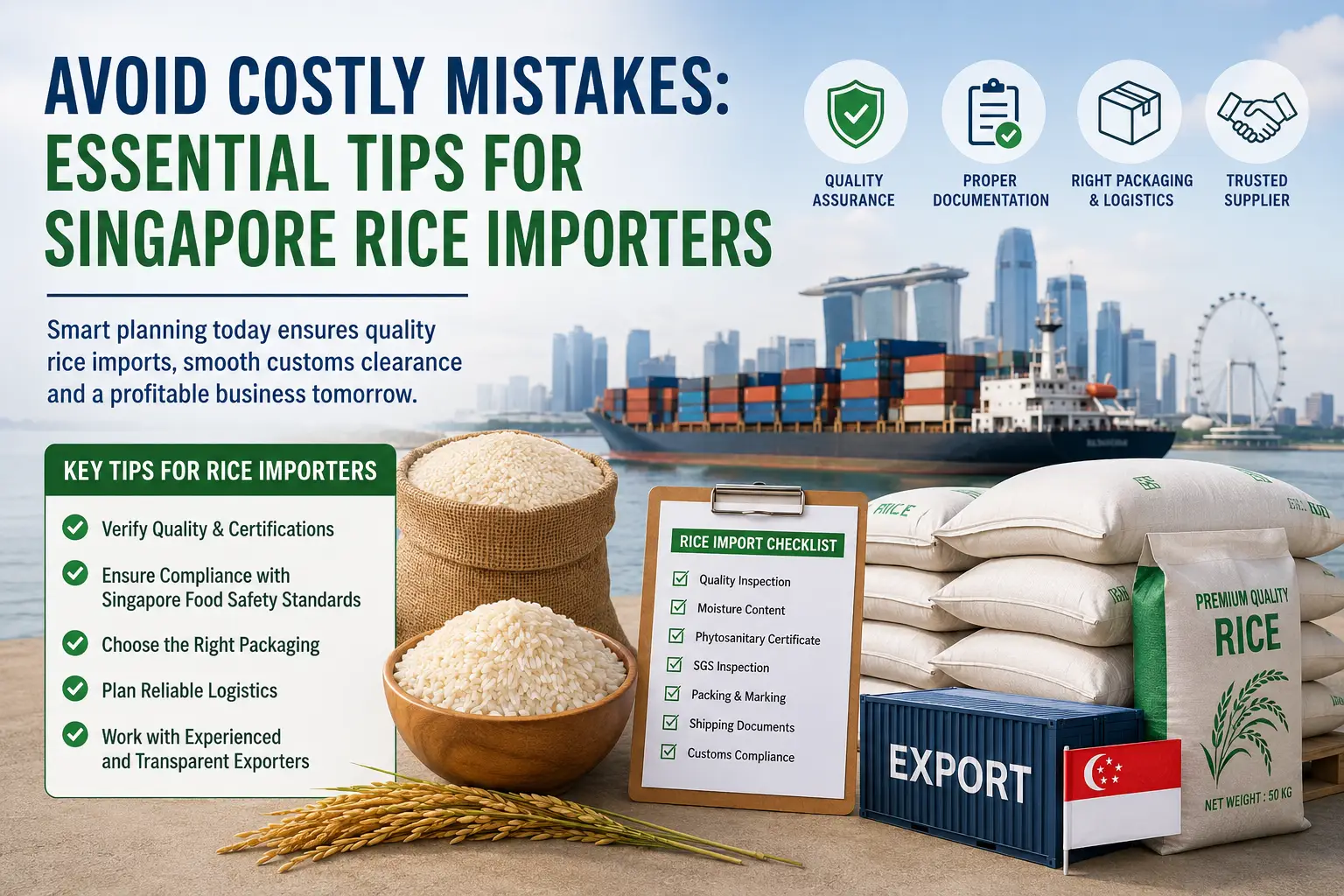
Singapore relies heavily on imported rice to meet domestic consumption and food industry demands. For food processors, wholesalers, retailers, and import-export managers, choosing the right rice supplier is critical for maintaining quality, ensuring regulatory compliance, and avoiding costly supply chain disruptions.
Growing Demand for Imported Rice in Singapore
As one of Asia’s leading food trading hubs, Singapore imports rice from several countries to ensure food security and meet diverse consumer preferences. Importers must carefully evaluate suppliers based on quality standards, pricing, reliability, and export experience.
Key factors to consider include:
- Consistent grain quality and variety selection
- Competitive pricing and stable supply capacity
- Experience in international rice exports
- Compliance with Singapore’s food safety regulations
- Reliable logistics and documentation support
Verify Quality and Food Safety Standards
One of the biggest mistakes rice importers make is failing to verify product quality before shipment. Proper inspections and certifications help prevent customs issues, product rejections, and financial losses.
| Quality Parameter | Recommended Standard |
|---|---|
| Moisture Content | Typically below 14% to maintain freshness during transit |
| Broken Grains | As per contract specifications and grade requirements |
| Foreign Matter | Minimal levels achieved through advanced cleaning processes |
| Certifications | Phytosanitary Certificate, SGS Inspection, Certificate of Origin, and other required export documents |
Always request quality reports and pre-shipment inspection certificates before finalizing bulk purchases.
Choose the Right Packaging and Logistics Solutions
Proper packaging and logistics planning play a crucial role in preserving rice quality throughout transportation.
Common options include:
- PP woven bags (25kg and 50kg)
- Jumbo bags (1-ton bulk packaging)
- Private label packaging for retail distribution
- FOB and CIF shipping terms based on buyer preference
- Container moisture protection using desiccants
- Proper fumigation and phytosanitary treatments before shipment
Common Mistakes to Avoid
- Selecting suppliers based solely on the lowest price
- Ignoring quality certifications and inspection reports
- Failing to verify export documentation requirements
- Overlooking packaging specifications for local market needs
- Not planning for shipping delays and inventory management
Final Thoughts
Successful rice importing requires more than finding a supplier—it requires building a reliable supply chain. By focusing on quality assurance, regulatory compliance, packaging standards, and trusted export partners, Singapore rice importers can reduce risks, protect profit margins, and ensure consistent product availability in the market.
Frequently asked questions
What are the main quality standards for importing Indian Rice Exporer To in SINGAPORE?
Importing Rice Exporer To to SINGAPORE requires strict verification of food safety certificates, correct tariff classification, moisture content verification, and matching standard container loads.
How can B2B buyers verify credentials of Indian Rice Exporer To exporters?
Importing Rice Exporer To to SINGAPORE requires strict verification of food safety certificates, correct tariff classification, moisture content verification, and matching standard container loads.
What are the shipping and logistics requirements for bulk Rice Exporer To in SINGAPORE?
Importing Rice Exporer To to SINGAPORE requires strict verification of food safety certificates, correct tariff classification, moisture content verification, and matching standard container loads.
How do seasonal crop cycles affect the pricing of Indian Rice Exporer To?
Importing Rice Exporer To to SINGAPORE requires strict verification of food safety certificates, correct tariff classification, moisture content verification, and matching standard container loads.
What customs documents are required to import Indian Rice Exporer To in SINGAPORE?
Importing Rice Exporer To to SINGAPORE requires strict verification of food safety certificates, correct tariff classification, moisture content verification, and matching standard container loads.
Next steps for wholesale buyers
To ensure a reliable supply of Rice Exporer To to SINGAPORE, B2B procurement teams should partner with established agricultural exporters in India. Reach out to Weltweit Agri to discuss specifications, request sample testing, and secure contractual pricing for the upcoming crop season.