Choosing the Right Indian Rice Supplier for Southeast Asian Food Distributors
Choosing the right Indian rice supplier for Southeast Asian food distributors is not only a purchasing decision but a supply chain decision. For importers, wholesalers, supermarket suppliers, food service distributors, and processors, rice quality must align with local culinary preferences, import regulations, packaging needs, and delivery
Learn More
The Complete B2B Guide to Sourcing and Importing Indian Rice to Singapore
To import rice to Singapore successfully, buyers need more than a competitive price. They need the right rice variety, compliant documentation, SFA-ready quality controls, packaging that fits retail or foodservice channels, and an exporter that can deliver consistent specifications shipment after shipment. For Singapore importers, the
Learn More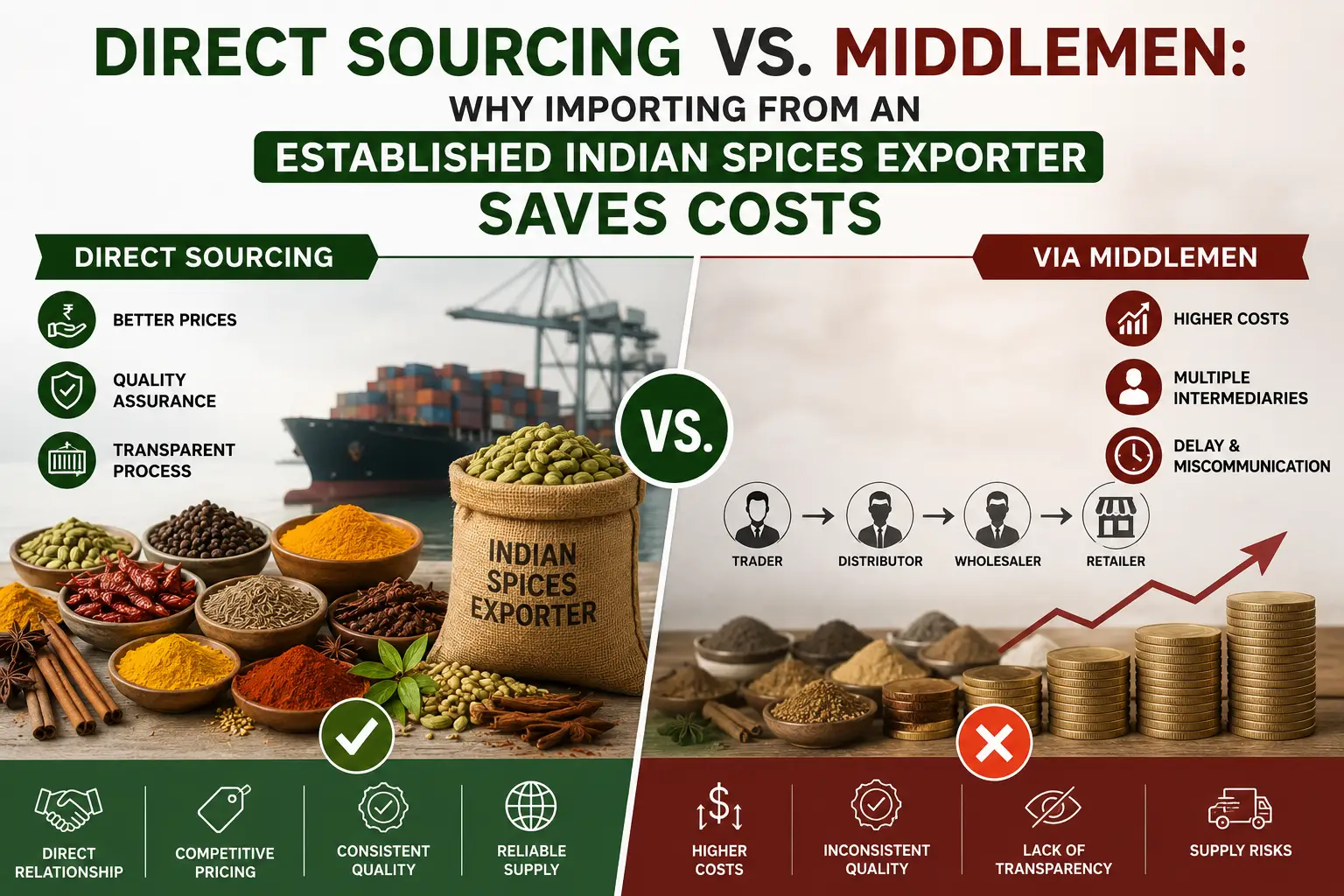
Direct Sourcing vs. Middlemen: Why Importing from an Established Indian Spices Exporter Saves Costs
If you import cumin, turmeric, chilli, coriander, black pepper, or blended spice ingredients, buying through traders is rarely the lowest-risk or lowest-cost model. A capable Indian Spices Exporter gives you direct control over specifications, processing, packaging, documents, and shipment planning, which matters more than a headline
Learn More
The Ultimate Sourcing Guide: Partnering with an Indian Spices Exporter for Global Food Brands
Selecting an Indian Spices Exporter for a food brand, importer, or ingredient distributor requires more than checking product availability. You need verified quality systems, destination-market compliance, custom processing, and reliable logistics. For buyers in Armenia, Georgia, Hong Kong, Indonesia, Japan, Jordan, Kuwait, Malaysia, and Papua New
Learn More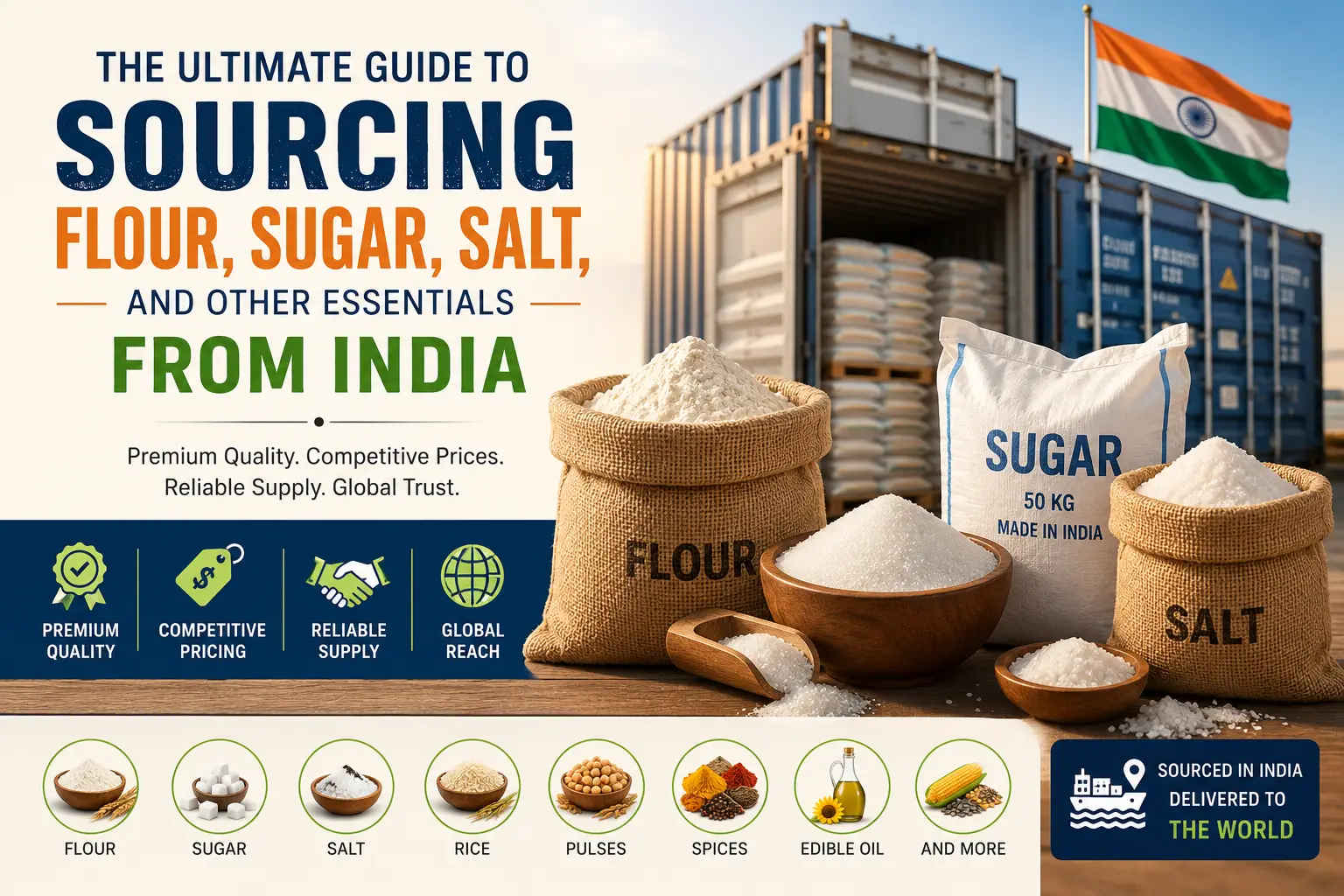
The Ultimate Guide to Sourcing Flour, Sugar, Salt, and Other Essentials from India
If you are evaluating flour sugar salt and other essentials exporters, India is a highly practical sourcing origin for international buyers needing product range, scalable supply, and flexible packaging. Sourcing from a single, reliable Indian exporter reduces vendor fragmentation, simplifies mixed-container buying, and improves consistency across
Learn More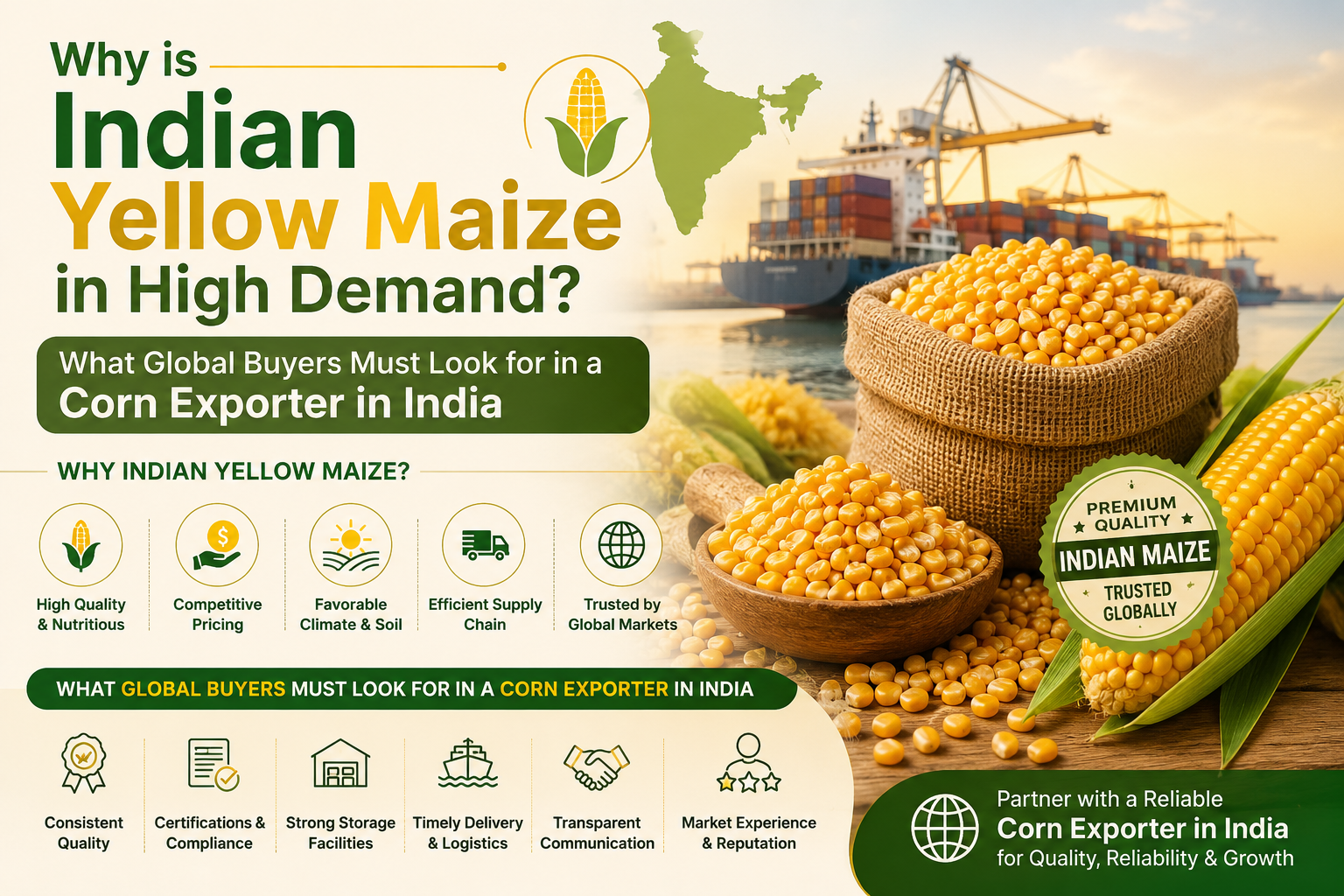
Why is Indian Yellow Maize in High Demand? What Global Buyers Must Look for in a Corn Exporter in India
Indian yellow maize is in high demand because international buyers increasingly want non-GMO origin, dependable year-round supply, and export-ready quality for feed, starch, and food processing. For buyers evaluating a Corn Exporter India, the real decision is not just price; it is whether the supplier can
Learn More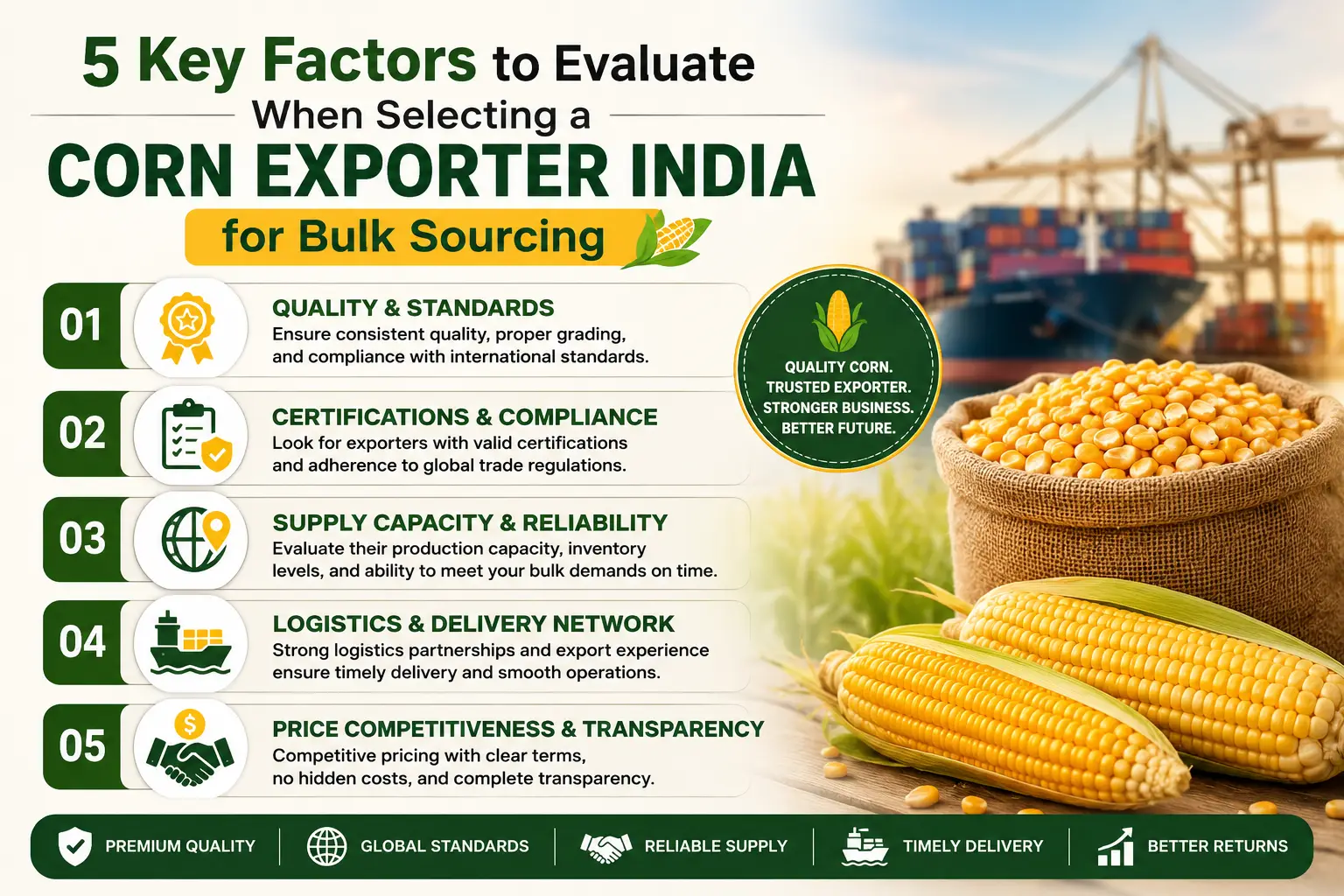
5 Key Factors to Evaluate When Selecting a Corn Exporter in India for Bulk Sourcing
Selecting the right Corn Exporter India partner comes down to five practical checks: measurable grain quality, export compliance, supply consistency, packaging flexibility, and logistics execution. Buyers importing bulk maize for feed, starch, flour, grits, or food processing should verify these points before negotiating price, because shipment
Learn More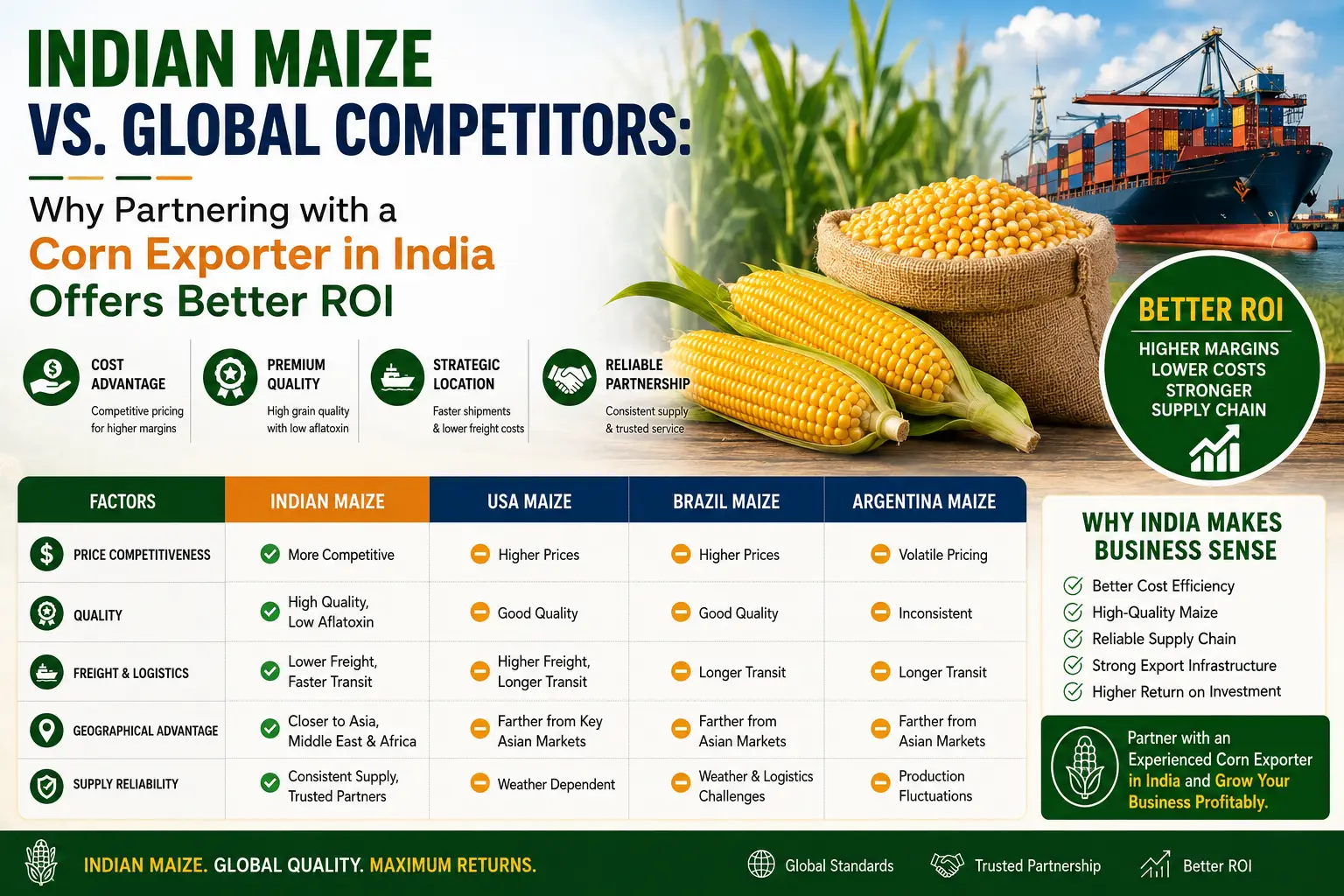
Indian Maize vs. Global Competitors: Why Partnering with a Corn Exporter in India Offers Better ROI
If your goal is better procurement ROI, partnering with a Corn Exporter India can be a practical choice when you need competitive pricing, buyer-specific specifications, and flexible shipment planning. For many importers, Indian maize is not simply an alternative origin; it is a supply option that
Learn More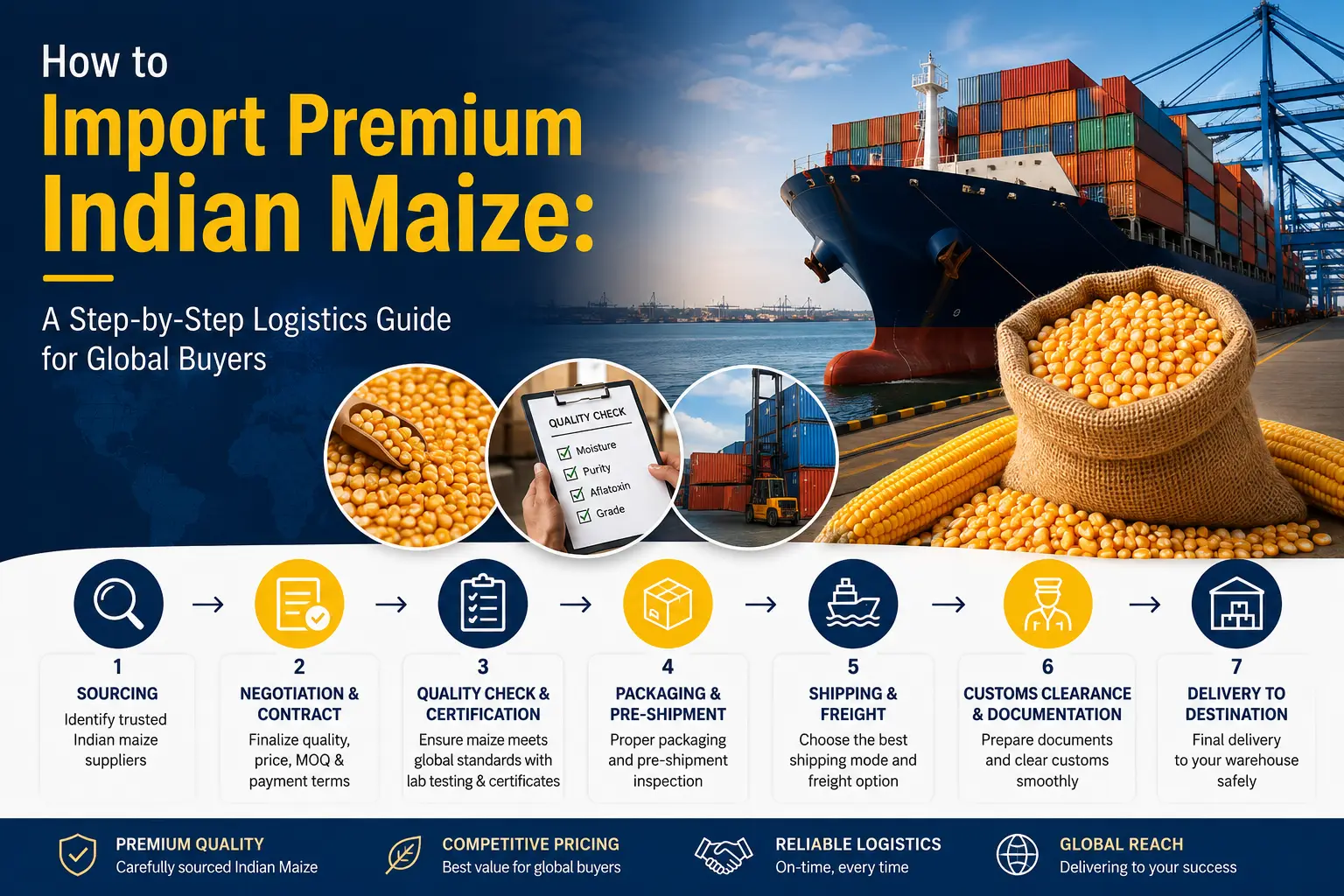
How to Import Premium Indian Maize: A Step-by-Step Logistics Guide for Global Buyers
To import premium Indian maize successfully, buyers need more than a price quote. They need a reliable Corn Exporter India partner who can match the right maize grade to the intended use, confirm quality specifications before shipment, prepare compliant export documents, and manage packing and freight
Learn More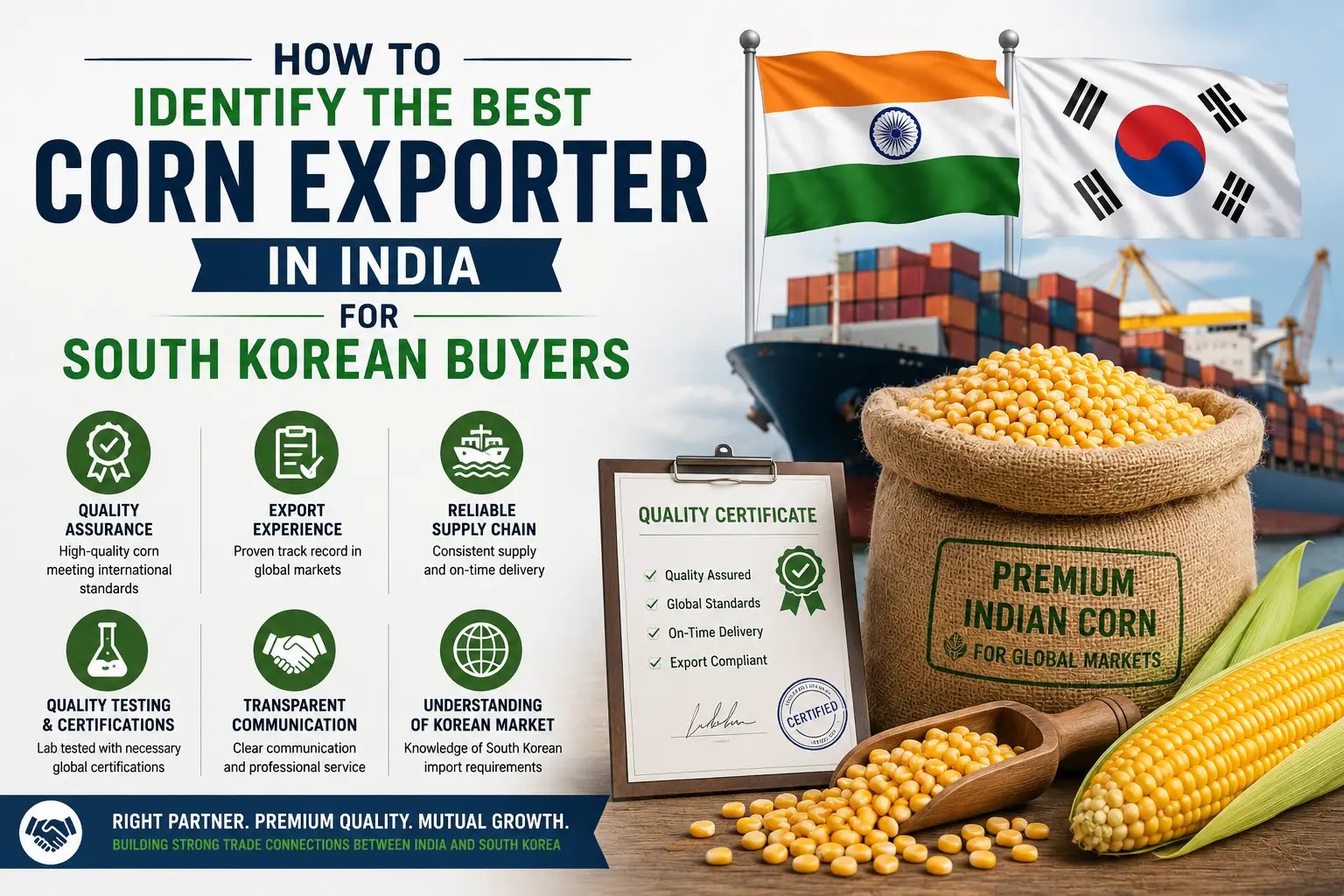
How to Identify the Best Corn Exporter in India for South Korean Buyers
To identify the best corn exporter, South Korean buyers should evaluate export readiness, quality consistency, documentation accuracy, logistics capability, and responsiveness to buyer specifications before comparing price. The right Indian supplier is not simply the lowest-quote vendor; it is the exporter that can deliver compliant corn,
Learn More