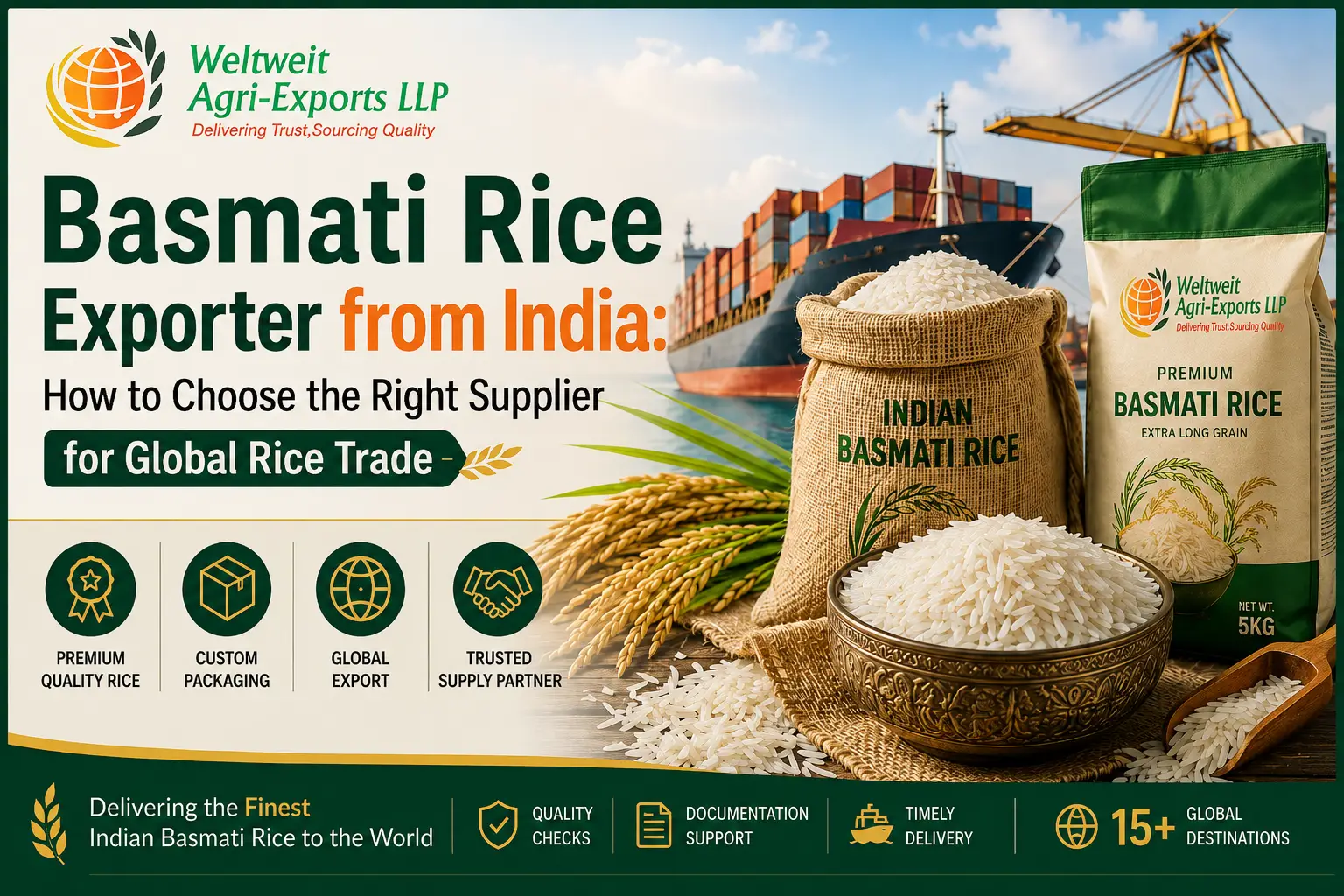
India has built a strong reputation in the global rice market, and basmati rice remains one of the most demanded varieties among international buyers. Known for its long grains, natural aroma, fluffy texture, and excellent cooking quality, Indian basmati rice is widely used by wholesalers, importers, food distributors, hotels, restaurants, supermarkets, and private-label brands.
For buyers searching for a reliable basmati rice exporter from India, the main requirement is not just finding rice at a competitive price. The real requirement is finding an exporter who can provide consistent quality, proper packaging, export documentation, timely shipment, and long-term supply support.
At Weltweit Agri-Exports LLP, we support global buyers with quality Indian agricultural products, including basmati and non-basmati rice. With a focus on quality control, packaging, and export reliability, we help international customers source Indian rice with confidence.
Why Indian Basmati Rice Is Preferred Worldwide
Basmati rice is different from ordinary long-grain rice because of its unique fragrance, slender grain structure, and elongation after cooking. When cooked properly, basmati rice remains separate, soft, and aromatic, making it suitable for many traditional and modern cuisines.
Indian basmati rice is commonly used for:
- Biryani and pulao
- Fried rice and steamed rice dishes
- Restaurant and hotel kitchens
- Retail rice packs
- Supermarket private-label packaging
- Food service and catering supply
- Bulk trading and wholesale distribution
The demand for basmati rice is especially strong in markets where buyers focus on premium rice quality, stable supply, and trusted Indian origin.
What Makes a Good Basmati Rice Exporter from India?
Choosing the right rice exporter is an important business decision. A reliable exporter must understand both product quality and export requirements. Buyers should not look only at price per metric ton. They should also check the exporter’s ability to maintain grain quality, moisture level, packaging strength, shipment timelines, and documentation accuracy.
A good basmati rice exporter from India should offer:
| Requirement | Why It Matters for Buyers |
|---|---|
| Consistent grain quality | Ensures the same cooking result across multiple shipments |
| Proper sorting and cleaning | Reduces broken grains, dust, and unwanted particles |
| Suitable packaging options | Supports wholesale, retail, and private-label business needs |
| Export documentation support | Helps smooth customs clearance and international trade process |
| Timely dispatch | Prevents supply chain delays for importers and distributors |
| Transparent communication | Builds long-term trust between buyer and exporter |
For international buyers, consistency is often more valuable than one-time low pricing. Rice is a repeat-purchase commodity, and even a small variation in quality can affect customer satisfaction.
Types of Basmati Rice Buyers Commonly Source from India
Different markets prefer different forms of basmati rice depending on cooking style, price range, customer expectations, and distribution channel. Some buyers want premium aged basmati rice, while others prefer parboiled or sella basmati rice for food service and bulk use.
Common basmati rice categories include:
1121 Basmati Rice
1121 basmati rice is one of the most popular varieties because of its extra-long grain length and excellent elongation after cooking. It is widely used for biryani, premium rice packs, hotels, restaurants, and food service markets.
Steam Basmati Rice
Steam basmati rice is processed using steam treatment, which helps maintain grain strength and gives a clean cooking result. It is suitable for premium retail and commercial kitchens.
Golden Sella Basmati Rice
Golden sella basmati rice has a golden appearance and firm grain texture. It is preferred in many food service markets because it handles bulk cooking well and gives good plate presentation.
Creamy Sella Basmati Rice
Creamy sella basmati rice offers a balanced option for buyers who want good quality, attractive appearance, and practical pricing for regular rice consumption.
Traditional Basmati Rice
Traditional basmati rice is known for its natural aroma and premium eating experience. It is suitable for high-end retail, specialty food stores, and premium hospitality buyers.
Key Quality Factors Buyers Should Check Before Importing Basmati Rice
When sourcing a basmati rice exporter from India, buyers should clearly define their quality requirement before confirming an order. This avoids confusion during inspection, packing, and shipment.
Important quality factors include:
1. Grain Length
Long and uniform grains are one of the major quality indicators of basmati rice. Buyers should confirm average grain length and elongation after cooking based on their market requirement.
2. Broken Percentage
The percentage of broken grains affects both appearance and pricing. Premium buyers usually prefer lower broken percentage, while some bulk markets may accept a higher percentage depending on the application.
3. Moisture Level
Moisture control is important for shelf life, storage safety, and shipment stability. Excess moisture can create quality issues during long-distance export.
4. Aroma and Taste
Basmati rice is valued for its natural aroma. Buyers should ensure the rice variety and processing method match their customer expectations.
5. Sortex Cleaning
Sortex-cleaned rice helps remove discolored grains, foreign particles, and impurities. This is especially important for retail packs and premium markets.
6. Packaging Strength
Rice packaging must protect the product during handling, container loading, shipping, and storage. Good packaging reduces the risk of damage and leakage.
Packaging Options for Basmati Rice Export
Packaging plays a major role in rice export business. Different buyers need different pack sizes depending on their market.
Common packaging options include:
- 1 kg retail packs
- 5 kg family packs
- 10 kg consumer packs
- 25 kg wholesale bags
- 50 kg bulk bags
- Private-label packaging
- Custom branding based on buyer requirement
Weltweit Agri-Exports LLP focuses on custom packaging solutions for global buyers, helping importers and distributors source products in formats suitable for their market.
Why Importers Prefer Working with Indian Rice Exporters
India has a strong agricultural base, advanced rice milling infrastructure, and long-standing export experience. This makes India one of the most important sourcing destinations for basmati rice.
Importers prefer Indian exporters because they can access:
- Multiple basmati and non-basmati rice varieties
- Competitive sourcing options
- Bulk shipment capacity
- Flexible packaging formats
- Established export processes
- Strong global demand for Indian-origin rice
For businesses planning to build a rice distribution brand, India offers both premium and commercial rice options. This allows buyers to select rice based on their target customer segment.
Basmati Rice for Retail, Wholesale, and Food Service
A serious rice buyer should choose rice based on the final use.
For retail stores, packaging design, grain appearance, aroma, and brand presentation are important. Customers buying from supermarkets usually compare rice visually and expect consistent cooking performance.
For wholesale distributors, price stability, container availability, packaging durability, and repeat supply matter more.
For hotels, restaurants, and catering companies, cooking performance is the key factor. Rice should remain separate, should not become sticky, and should deliver good yield after cooking.
For private-label brands, the exporter must support packaging customization, proper labeling, and consistent product supply.
Questions to Ask Before Choosing a Basmati Rice Exporter from India
Before placing an order, buyers should ask the exporter clear questions such as:
- Which basmati rice varieties do you supply?
- What is the broken percentage available?
- Can you provide 25 kg, 50 kg, or private-label packaging?
- Do you support export documentation?
- What is the minimum order quantity?
- Can you supply consistently for repeat orders?
- What quality checks are followed before dispatch?
- Which countries do you currently export to?
These questions help buyers identify whether the exporter is suitable for long-term business or only for one-time trading.
Why Choose Weltweit Agri-Exports LLP for Indian Basmati Rice?
Weltweit Agri-Exports LLP is an Indian agricultural products exporter supplying quality food grains and agri commodities to global buyers. The company focuses on rice, sugar, salt, flours, peanuts, millet, animal feed, and other agricultural products. Its website highlights export supply to 15+ global destinations, custom packaging, quality checks, and global trade support.
For rice buyers, Weltweit Agri-Exports LLP offers a practical sourcing advantage because the company understands both product quality and international buyer expectations. Whether you are looking for basmati rice for retail distribution, wholesale trading, food service, or private-label business, the right sourcing partner can help you maintain product consistency and business reliability.
Explore Indian rice products here:
https://weltweitagri.in/indian-rice/
Final Thoughts
Finding the right basmati rice exporter from India is not only about price. It is about selecting a partner who can deliver quality rice, proper packaging, smooth documentation, and dependable export support.
Indian basmati rice has strong demand because of its aroma, long grain, cooking quality, and premium positioning in international markets. For importers, wholesalers, distributors, and food businesses, working with a reliable Indian exporter can help build a stable rice supply chain.
If you are planning to import basmati rice from India, Weltweit Agri-Exports LLP can support your requirement with quality Indian rice, flexible packaging, and export-focused service.
FAQs
1. Why is Indian basmati rice popular in export markets?
Indian basmati rice is popular because of its long grain, natural aroma, soft texture, and excellent elongation after cooking. It is widely used in retail, restaurants, catering, and premium food service markets.
2. What should I check before selecting a basmati rice exporter from India?
You should check rice variety, grain length, broken percentage, moisture level, packaging options, export experience, documentation support, and the exporter’s ability to supply consistently.
3. Can basmati rice be packed under my own brand?
Yes, many basmati rice exporter from India support private-label packaging depending on order quantity, packaging design, and export requirements. Buyers should confirm packaging size, artwork, and labeling details before placing an order.
4. Which basmati rice is best for biryani?
1121 basmati rice, steam basmati rice, and golden sella basmati rice are commonly preferred for biryani because they offer long grains, good elongation, and attractive presentation after cooking.
5. What licenses or documents are required to export basmati rice from India?
To export basmati rice from India, exporters generally need an Import Export Code (IEC) from DGFT, APEDA e-RCMC registration, a Phytosanitary Certificate, and RCAC registration from APEDA for basmati and non-basmati rice export contracts. Requirements may also change based on the importing country, so buyers and exporters should always check the latest APEDA rice export requirements before shipment.
6. Does Weltweit Agri-Exports LLP supply basmati and non-basmati rice?
Yes, Weltweit Agri-Exports LLP supplies Indian rice products, including basmati and non-basmati rice, for international buyers. You can view the rice page here: https://weltweitagri.in/indian-rice/
Looking for a Reliable Basmati Rice Exporter from India?
Connect with Weltweit Agri-Exports LLP for quality Indian basmati rice, flexible packaging options, and export support for your market.
Send Your Rice Requirement