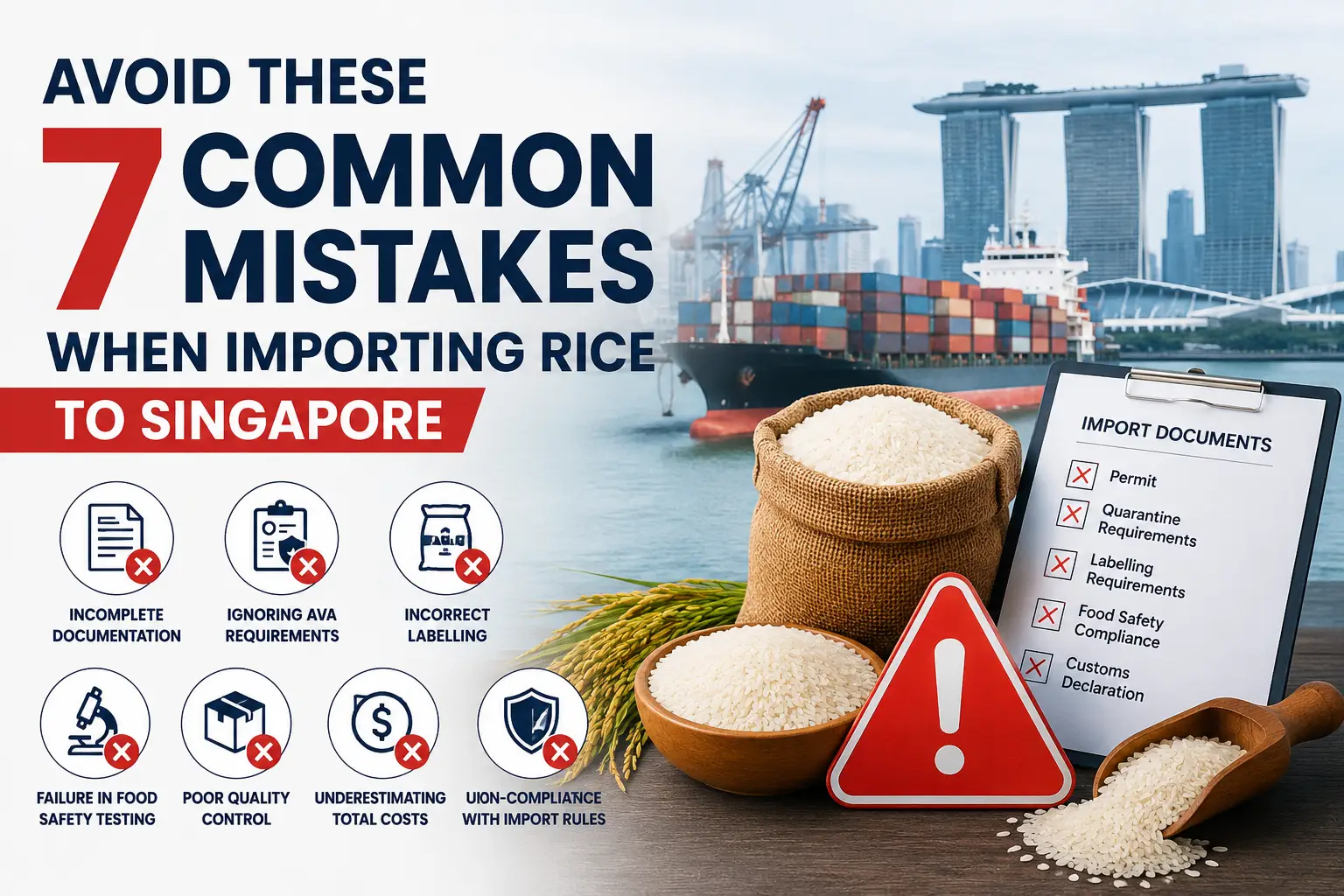
Importing rice to Singapore can be a lucrative venture, given the country’s high demand for quality rice. However, many businesses encounter hurdles due to common mistakes in the import process. In this guide, we will explore the seven most frequent errors made when importing rice to Singapore and how to avoid them.
1. Lack of Understanding Local Regulations
One of the significant challenges faced by importers is not being aware of the regulations governing rice imports in Singapore. The Agri-Food & Veterinary Authority of Singapore (AVA) has specific guidelines that must be adhered to. Failing to comply can result in delays or confiscation of goods.
2. Poor Supplier Selection
Selecting the right supplier is crucial. Many businesses rush into agreements without conducting thorough research. This can lead to issues with product quality, delivery times, and pricing. Always vet suppliers, check their certifications, and request samples before finalizing your order.
3. Inadequate Quality Control Measures
Quality control is vital in the import of rice. Importers often overlook the importance of ensuring that the rice meets local quality standards. Implementing strict quality checks at various stages of the supply chain can prevent subpar products from reaching the market.
4. Ignoring Logistics and Transportation
The logistics of transporting rice can be complicated. Factors such as shipping routes, customs clearance, and warehousing can significantly affect your bottom line. It’s essential to have a well-thought-out logistics plan that accounts for these variables.
5. Mismanagement of Costs
Understanding the total cost of importing rice is crucial. This includes not only the purchase price but also shipping, insurance, tariffs, and any additional fees. Many businesses underestimate these costs, leading to financial strain. Create a comprehensive budget to avoid surprises.
6. Neglecting Market Research
Market demand can fluctuate, and not conducting thorough market research can result in overstocking or understocking rice. Understanding consumer preferences and trends in Singapore can help you make informed decisions about quantities and types of rice to import.
7. Failing to Build Relationships
Building strong relationships with suppliers, logistics partners, and local distributors can significantly enhance your import business. Many importers focus solely on transactions and miss out on the advantages of having reliable partnerships.
Comparison Table of Common Mistakes
| Mistake | Impact | Solution |
|---|---|---|
| Lack of Understanding Local Regulations | Delays and confiscation | Research AVA guidelines thoroughly |
| Poor Supplier Selection | Quality issues and delays | Vet suppliers and request samples |
| Inadequate Quality Control Measures | Subpar products | Implement strict quality checks |
| Ignoring Logistics and Transportation | Increased costs and delays | Plan logistics in advance |
| Mismanagement of Costs | Financial strain | Create a comprehensive budget |
| Neglecting Market Research | Over/understocking | Conduct thorough market analysis |
| Failing to Build Relationships | Lost opportunities | Focus on building partnerships |
Frequently Asked Questions
What are the key regulations for importing rice to Singapore?
The key regulations include compliance with AVA guidelines, ensuring proper packaging, and adhering to food safety standards. It is essential to familiarize yourself with these regulations to avoid issues.
How can I find reliable rice suppliers?
Research potential suppliers online, check industry forums, and attend trade shows. Request samples and verify their certifications before making any agreements.
What quality control measures should I implement?
Implement inspections during production, check samples upon arrival, and conduct random quality checks throughout your inventory. Having a dedicated quality control team can also help maintain standards.
What logistics factors should I consider?
Consider shipping routes, customs clearance processes, storage facilities, and transportation methods. Partnering with experienced logistics companies can streamline this process.
How can I manage costs effectively?
Create a detailed budget that includes all costs associated with importing rice. Track expenses closely, and look for opportunities to negotiate better terms with suppliers and freight forwarders.
Conclusion
Avoiding these common mistakes when importing rice to Singapore can help you streamline your operations and enhance your profitability. By understanding local regulations, selecting reliable suppliers, implementing quality control measures, and managing logistics effectively, you can set your business up for success. If you’re ready to start your rice import journey or need assistance with any aspect of the process, contact us today for expert guidance!