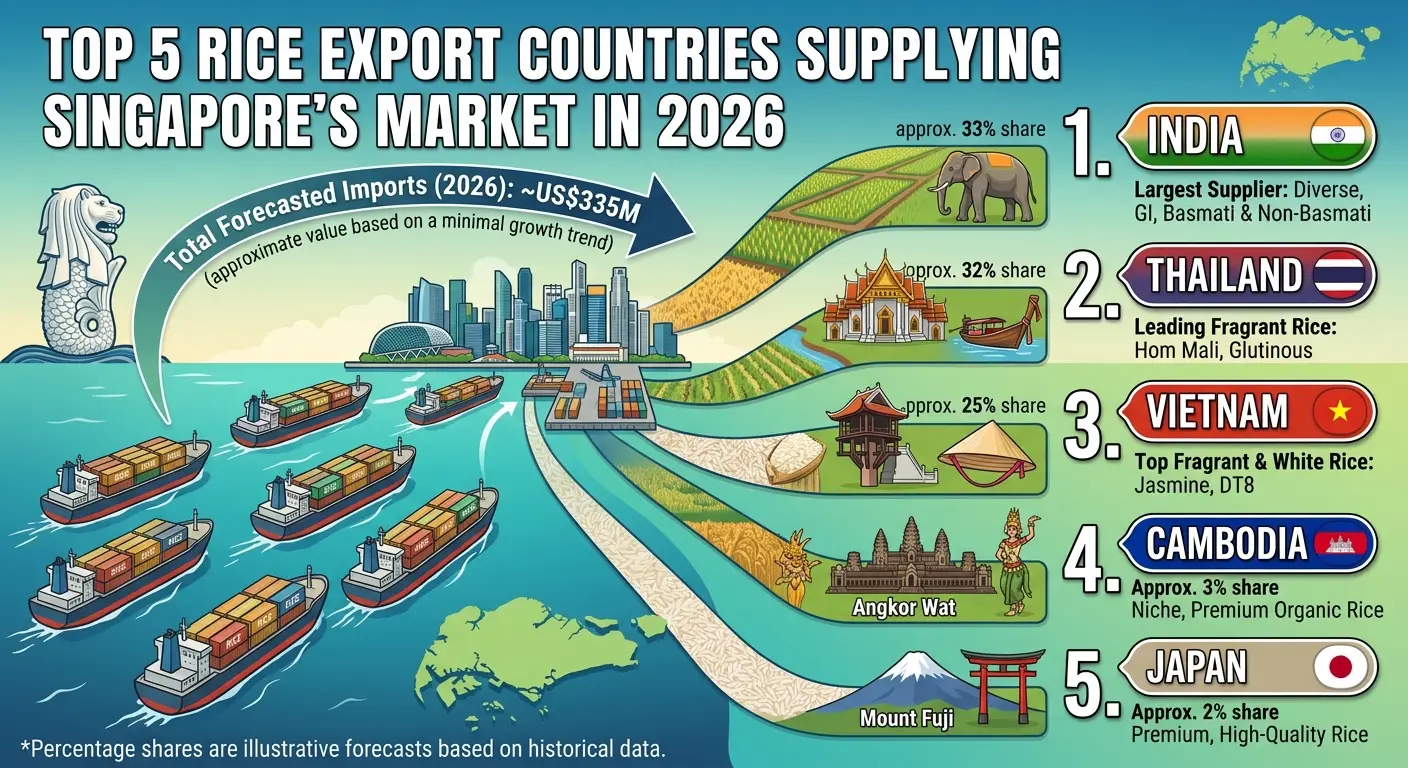
Singapore, a bustling global hub with a diverse population, relies almost entirely on imports to satisfy its significant demand for rice. As a staple food, ensuring a stable, high-quality, and competitively priced supply is paramount for both consumers and the B2B importers who facilitate this critical trade. Understanding the dynamics of global rice export markets and identifying key supplier nations is crucial for agricultural B2B import-export businesses planning their strategies for the coming years.
The year 2026, though a few years away, requires forward-thinking analysis. Global climate patterns, evolving geopolitical landscapes, and shifting agricultural policies continually reshape the rice trade. This comprehensive guide delves into the anticipated top 5 rice export countries that are expected to be the primary suppliers to Singapore’s discerning market, offering invaluable insights for importers, distributors, and bulk purchasers.
Understanding Singapore’s Rice Import Landscape
Singapore’s unique position as a city-state with limited agricultural land means it imports over 90% of its food, with rice being a cornerstone. The market is characterized by a demand for a wide variety of rice types, catering to its multicultural populace. From aromatic Thai Jasmine rice and fragrant Indian Basmati to versatile long-grain and economical broken rice, importers must navigate a complex landscape of consumer preferences and price points.
The Agri-Food & Veterinary Authority of Singapore (AVA), now part of the Singapore Food Agency (SFA), plays a vital role in ensuring food security, including rice. This involves maintaining strategic stockpiles and encouraging diversification of import sources to mitigate risks associated with supply chain disruptions from any single region. For B2B rice importers, this means a consistent need for reliable suppliers who can meet stringent quality standards and deliver on time, often under long-term contractual agreements. The focus for 2026 will continue to be on sustainability, food safety, and the ability of exporting nations to adapt to changing climate conditions affecting their yields.
The Top 5 Rice Export Powerhouses for Singapore in 2026
Based on historical trade data, current production trends, and projected market dynamics, these five nations are anticipated to be the leading sources for Singapore’s rice imports in 2026. Each country brings unique strengths, varieties, and considerations for B2B importers.
1. India: The Giant with Diverse Offerings
India is the world’s largest rice exporter and offers an unparalleled diversity of rice varieties, from the world-famous Basmati to various types of non-Basmati long-grain and broken rice. While Basmati caters to a specific, high-end market segment in Singapore, India’s broader range of affordable rice types makes it a crucial supplier for general consumption. India’s vast agricultural output ensures large volumes, making it a critical source for global food security.
- Key Varieties: Basmati rice (various types), Sona Masuri, Ponni, various Long-grain White Rice (5%, 10%, 25% broken).
- Strengths: Enormous production capacity, wide range of varieties to suit diverse preferences and price points, competitive pricing for non-Basmati varieties, significant export infrastructure.
- Considerations: Export policies can be subject to government intervention (e.g., export bans on certain varieties or tariffs) to manage domestic food security, which can create market volatility. Logistics can sometimes be challenging due to the scale of operations.
2. Thailand: The Undisputed King of Aromatic Rice
Thailand has historically been a dominant force in the global rice export market, particularly renowned for its fragrant jasmine rice (Hom Mali). For Singapore, Thai rice is a premium choice, highly sought after for its distinctive aroma, soft texture, and culinary versatility. Thai producers have a long-standing reputation for quality control and consistent supply, making them a reliable partner for Singaporean importers.
- Key Varieties: Thai Hom Mali (Jasmine Rice), Thai White Rice (long-grain), Thai Pathumthani Fragrant Rice.
- Strengths: Superior quality and aroma, established trade routes, robust supply chain infrastructure, strong government support for quality standards, brand recognition.
- Considerations: Prices can be higher due to premium quality and strong demand. Vulnerability to drought and floods, which can impact yields and prices. Importers need to monitor climate forecasts.
3. Vietnam: The Rising Star with Competitive Pricing
Vietnam has rapidly emerged as a significant player in the global rice export arena, known for its consistent supply of good quality, competitively priced long-grain white rice. Its proximity to Singapore offers logistical advantages, making it an attractive option for importers seeking cost-effective solutions without compromising on essential quality. Vietnam’s agricultural sector has heavily invested in modernizing its rice production and export capabilities.
- Key Varieties: Jasmine rice (different varieties from Thai Hom Mali), Long-grain White Rice (5% and 10% broken), ST25 (premium fragrant rice).
- Strengths: Competitive pricing, consistent supply volumes, geographical proximity reduces shipping times and costs, improving grain varieties.
- Considerations: While quality has improved significantly, some premium segments still prefer Thai rice. Climate change impacts (e.g., Mekong Delta salinity intrusion) pose long-term risks to yields.
4. Pakistan: A Growing Presence in Premium and Standard Rice
Pakistan has steadily increased its footprint in the global rice export market, particularly for its aromatic Basmati rice, which competes directly with Indian Basmati. Beyond Basmati, Pakistan also exports significant quantities of non-Basmati long-grain white rice and broken rice, making it a versatile supplier. The country’s commitment to improving rice quality and enhancing its export infrastructure positions it as a reliable option for Singaporean importers looking to diversify their sources.
- Key Varieties: Super Basmati, PK-386 (Basmati variant), KS-282 (non-Basmati long grain), IRRI-6/IRRI-9 (long-grain white rice).
- Strengths: High-quality Basmati at competitive prices, growing focus on quality and international standards, improving export logistics.
- Considerations: Production can be vulnerable to water availability and climate conditions, which can lead to fluctuating yields. Political stability and infrastructure development are ongoing factors to monitor.
5. Cambodia: The Emerging Niche for Premium Fragrant Rice
Cambodia has gained international recognition for its premium fragrant rice, particularly its Phka Rumduol variety, which has won “World’s Best Rice” awards multiple times. While its export volumes are smaller than the giants, Cambodia offers a niche for high-quality, aromatic rice that appeals to discerning markets like Singapore. For B2B importers looking for premium alternatives or to diversify their fragrant rice portfolio, Cambodia presents an excellent opportunity.
- Key Varieties: Phka Rumduol (fragrant jasmine-like rice), Sen Kro Ob, various long-grain white rice.
- Strengths: Exceptional quality and unique aroma for its premium fragrant varieties, growing international reputation, increasing focus on sustainable farming practices.
- Considerations: Lower export volumes compared to larger players, which might limit bulk purchasing options. Infrastructure for processing and logistics is still developing, though improving.
Comparison of Top Rice Export Countries for Singapore (2026 Outlook)
To help B2B importers quickly assess the strengths and considerations of each nation, here’s a comparative overview:
| Country | Primary Varieties (Export to Singapore) | Key Strengths for Importers | Key Considerations/Challenges | Price Competitiveness (Relative) |
|---|---|---|---|---|
| Thailand | Jasmine Rice, White Rice | Premium quality, consistent supply, strong brand, established logistics. | Higher price point, climate vulnerability, premium market focus. | High |
| Vietnam | Long-grain White Rice, Jasmine Rice | Competitive pricing, high volume, geographical proximity, improving quality. | Mekong Delta climate risks, premium segment competition. | Medium-High |
| India | Basmati, Sona Masuri, Long-grain White Rice | Vast diversity, huge volumes, competitive pricing (non-Basmati), large network. | Policy volatility, logistics complexity, quality control variations. | Medium-Low (for non-Basmati) to High (for Basmati) |
| Pakistan | Basmati, IRRI-6/9, Long-grain White Rice | Competitive Basmati, growing quality, diversifying offerings. | Water availability, infrastructure development, regional stability. | Medium |
| Cambodia | Phka Rumduol (fragrant), Long-grain White Rice | Award-winning premium fragrant rice, unique aroma, sustainability focus. | Lower volumes, developing infrastructure, niche market. | High (for premium varieties) |
Navigating Rice Import Challenges and Opportunities
The global rice export market is dynamic and influenced by a multitude of factors. For B2B importers supplying Singapore, several challenges and opportunities will shape their strategies towards 2026:
Challenges:
- Climate Change Impact: Erratic weather patterns, including droughts, floods, and rising sea levels, directly affect rice yields in major producing regions. This leads to supply volatility and price fluctuations.
- Geopolitical Instability & Trade Policies: Export bans, tariffs, or trade disputes initiated by major exporting nations can severely disrupt supply chains and inflate prices. Importers must stay informed about political developments.
- Logistics and Shipping Costs: Global shipping disruptions, fuel price volatility, and port congestions can increase landed costs and impact delivery timelines.
- Quality Control & Food Safety: Ensuring consistent quality and adherence to stringent food safety standards, particularly for imports into Singapore, requires rigorous checks and reliable supplier partnerships.
Opportunities:
- Diversification of Sources: As highlighted by Singapore’s SFA, diversifying import origins reduces reliance on any single country, mitigating risks. Exploring emerging producers or niche markets can provide stability.
- Sustainable Sourcing: Growing consumer and regulatory demand for sustainably produced rice presents an opportunity for importers to partner with suppliers committed to eco-friendly practices, adding value to their offerings.
- Technological Advancements: Leveraging data analytics for market intelligence, blockchain for supply chain transparency, and advanced logistics solutions can optimize operations and enhance efficiency.
- Value-Added Products: Beyond raw rice, exploring opportunities in parboiled rice, specialty rice blends, or organic rice can cater to evolving consumer preferences and create higher-margin products.
Strategic Considerations for B2B Rice Importers
To thrive in the competitive Singaporean rice market in 2026, B2B importers should adopt several strategic approaches:
- Robust Supplier Relationships: Cultivate strong, long-term relationships with multiple trusted suppliers across different countries to ensure supply resilience and favourable terms. This involves regular communication, site visits (where feasible), and clear contractual agreements.
- Market Intelligence & Risk Management: Invest in real-time market intelligence to monitor global production forecasts, export policies, and price trends. Develop robust risk management strategies to hedge against price volatility and supply disruptions.
- Quality Assurance & Compliance: Implement stringent quality control protocols from farm to fork. Ensure all imports comply with Singapore’s strict food safety regulations and international standards. This builds trust and minimizes potential issues at customs.
- Optimized Logistics & Inventory Management: Streamline logistics processes to minimize shipping delays and costs. Efficient inventory management helps maintain optimal stock levels without incurring excessive storage expenses.
- Flexibility and Adaptability: The global rice market is constantly evolving. Importers must be agile enough to adapt to changes in supply, demand, and regulatory environments, adjusting sourcing strategies as needed.
Frequently Asked Questions (FAQs)
Q1: What are the primary types of rice imported by Singapore?
A1: Singapore’s diverse population demands a wide range of rice types. The primary imports include aromatic varieties like Thai Jasmine rice and Indian Basmati, various long-grain white rice (e.g., from Vietnam, Thailand, India), and broken rice for specific culinary uses or cost-effectiveness. The market also sees demand for specialty rices like Sona Masuri and Ponni.
Q2: How does climate change impact rice exports to Singapore?
A2: Climate change significantly impacts rice-exporting countries through increased frequency and intensity of extreme weather events such as droughts, floods, and typhoons. These events can devastate rice paddies, leading to reduced yields, lower quality, and subsequent price hikes. For Singaporean importers, this translates to potential supply instability and increased sourcing costs, necessitating diversification of suppliers and robust risk assessment, as discussed in the “Navigating Rice Import Challenges and Opportunities” section.
Q3: What role does government policy play in rice export from these countries?
A3: Government policies in major rice-exporting nations play a crucial role. For example, India has historically implemented export bans or tariffs on certain rice varieties to ensure domestic food security, which can have immediate global market repercussions. Similarly, governments in Thailand and Vietnam support their rice sectors through subsidies, quality control standards, and trade agreements. Importers must stay abreast of these policy changes as they directly influence supply availability and pricing for their B2B operations.
Q4: Why is diversifying rice import sources important for Singapore?
A4: Diversifying rice import sources is a critical strategy for Singapore to enhance its food security. By sourcing from multiple countries, Singapore mitigates the risks associated with potential supply disruptions from any single region due to climate events, political instability, or export restrictions. This strategy ensures a more stable and resilient supply chain, allowing importers to maintain consistent availability and manage price volatility effectively, as highlighted in the “Strategic Considerations for B2B Rice Importers” section.
Q5: How can B2B importers ensure the quality of rice from overseas suppliers?
A5: Ensuring rice quality from overseas suppliers requires a multi-faceted approach. Importers should establish strong, long-term relationships with reputable suppliers, conduct thorough due diligence, and implement strict quality control protocols. This includes pre-shipment inspections, adherence to international quality standards (e.g., ISO, HACCP), and compliance with Singapore’s specific food safety regulations. Regular communication and transparent contractual agreements are also vital to maintain consistent quality, as detailed under “Strategic Considerations for B2B Rice Importers.”
Conclusion
The Singaporean rice market in 2026 will continue to be a vibrant and demanding landscape for B2B importers. While traditional powerhouses like Thailand, Vietnam, and India will remain pivotal, newer players like Pakistan and Cambodia are carving out significant niches, offering diversification and competitive advantages. Success in this environment hinges on a deep understanding of each exporting nation’s strengths and challenges, coupled with strategic sourcing, robust risk management, and a commitment to quality and sustainability.
For agricultural B2B import-export businesses, staying informed, fostering strong supplier relationships, and adapting to global market dynamics will be key to ensuring a steady, reliable supply of this essential staple. By strategically navigating these global supply chains, importers can continue to meet Singapore’s diverse culinary needs and contribute to its food security for years to come.
Ready to optimize your rice import strategy for 2026? Contact us today to discuss how our expertise in global agricultural trade can support your business needs.