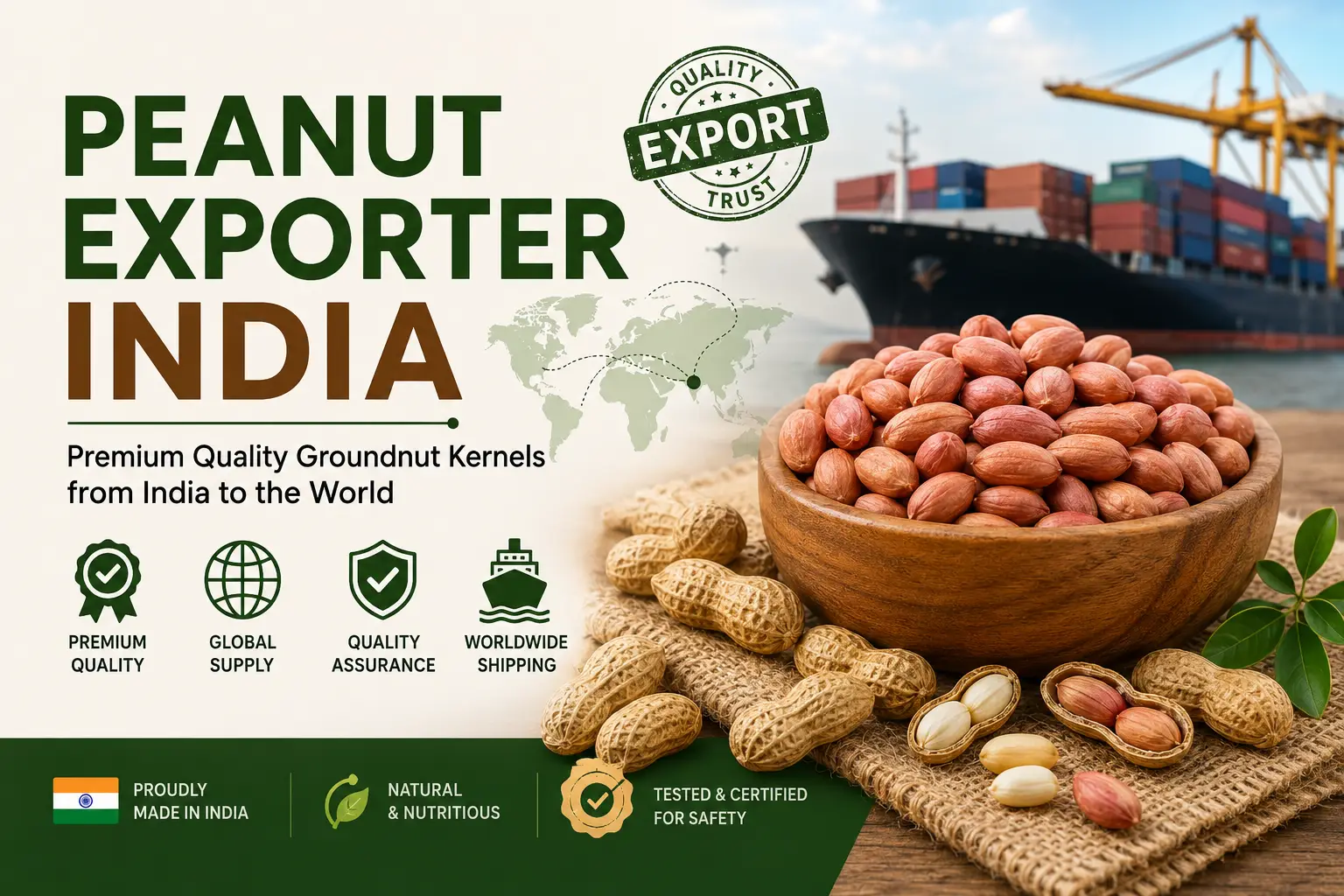
India has emerged as one of the world’s leading peanut and groundnut suppliers, serving buyers across Southeast Asia, the Middle East, Europe, and Africa. With strong agricultural production, advanced processing facilities, and strict export quality controls, Indian exporters continue to play a vital role in the global peanut trade.
If you are searching for a trusted peanut exporter from India, understanding product quality, export certifications, processing standards, and supply capabilities can help you choose the right supplier for long-term business growth.
Why India is a Leading Peanut Exporter
India is among the world’s largest producers and exporters of groundnuts. The country exports hundreds of thousands of metric tons annually to major international markets including Indonesia, Vietnam, the Philippines, Malaysia, and Thailand. Indian groundnuts are valued for their:
- High oil content
- Rich flavor and crunchiness
- Long shelf life
- Competitive pricing
- Multiple grade availability
- Strong export infrastructure
According to APEDA, India exported more than 746,000 MT of groundnuts valued at nearly USD 795 million during FY 2024-25.
Types of Peanuts Exported from India
Indian exporters supply various peanut grades to match different industry requirements.
Bold Peanuts (Runner Type)
Commonly used for:
- Roasting
- Peanut butter manufacturing
- Snack processing
- Oil extraction
Java Peanuts (Spanish Type)
Preferred for:
- Confectionery
- Bakery applications
- Coated peanut snacks
- Premium retail packaging
Raw Peanuts
Suitable for:
- Food processing industries
- Wholesale traders
- Repackaging businesses
Blanched Peanuts
Used in:
- Chocolate manufacturing
- Bakery products
- Premium snack production
For detailed specifications and available grades, buyers can explore our dedicated groundnut product page:
👉 Groundnut Kernels Export from India
Major Peanut Importing Countries from India
Indian peanut exporters serve several international markets, including:
| Country | Common Applications |
|---|---|
| Indonesia | Food Processing |
| Vietnam | Snack Manufacturing |
| Philippines | Roasting Industry |
| Malaysia | Retail & Food Industry |
| Thailand | Peanut Butter & Snacks |
| UAE | Wholesale Distribution |
| Saudi Arabia | Food Manufacturing |
| Turkey | Confectionery Industry |
Quality Standards Followed by Professional Peanut Exporters
International buyers increasingly focus on food safety, traceability, and compliance.
Reliable Indian exporters generally maintain:
APEDA Registration
Agricultural exporters dealing with peanuts and groundnut products are required to comply with APEDA export procedures and certification requirements. APEDA also manages traceability and export monitoring systems for peanut shipments.
Aflatoxin Testing
One of the most critical requirements in peanut exports is controlling aflatoxin levels.
APEDA mandates laboratory testing and certification through recognized laboratories before export shipments are approved. The system ensures compliance with importing country regulations.
Fumigation & Phytosanitary Compliance
Depending on the destination country, exporters may provide:
- Phytosanitary Certificates
- Fumigation Certificates
- Health Certificates
- Quality Analysis Reports
Quality Management Systems
Leading exporters often operate under:
- HACCP
- ISO 22000
- FSSAI Compliance
- GMP Standards
- Food Safety Management Systems
Why Aflatoxin Control Matters in Peanut Exports
Global buyers pay close attention to aflatoxin levels because excessive contamination can lead to shipment rejection.
The Government of India and APEDA have established strict procedures to ensure exported peanuts meet international food safety standards. Export consignments are tested through recognized laboratories, and certificates are issued only after successful compliance verification.
This system helps international buyers receive safer and more consistent product quality.
Factors to Consider When Choosing a Peanut Exporter in India
Before finalizing a supplier, consider the following:
Export Experience
Choose exporters with established international shipping experience and knowledge of destination-country regulations.
Processing Infrastructure
Look for suppliers with:
- Modern sorting facilities
- Cleaning systems
- Grading lines
- Moisture control processes
- Export-quality packaging
Documentation Support
A professional exporter should assist with:
- Commercial Invoice
- Packing List
- Bill of Lading
- Certificate of Origin
- Phytosanitary Certificate
- Quality Analysis Reports
Consistent Supply Capability
Bulk buyers should verify:
- Production capacity
- Seasonal availability
- Storage facilities
- Container loading capability
Benefits of Sourcing Peanuts from India
Competitive Pricing
India offers cost-effective sourcing options compared to many competing markets.
Multiple Varieties Available
Buyers can source different grades and specifications from a single supplier.
Strong Agricultural Base
India’s diverse growing regions help maintain year-round supply availability.
Global Export Network
Indian exporters have extensive experience shipping to Asia, Europe, Africa, and the Middle East.
Export Certifications That Add Buyer Confidence
When evaluating a peanut exporter, buyers often look for:
- APEDA Registration
- IEC (Importer Exporter Code)
- FSSAI Compliance
- HACCP Certification
- ISO 22000 Food Safety Certification
- Phytosanitary Certification
- Certificate of Origin
- Aflatoxin Test Reports
These certifications help ensure food safety, traceability, and regulatory compliance for international trade.
Frequently Asked Questions
Is India a major exporter of peanuts?
Yes. India is one of the largest peanut and groundnut exporters globally and supplies major markets across Asia, the Middle East, Europe, and Africa.
What certifications are required for peanut exports from India?
Depending on the destination country, exporters may require APEDA registration, aflatoxin test reports, phytosanitary certificates, fumigation certificates, and quality analysis reports.
What are the most exported peanut varieties from India?
Bold peanuts and Java peanuts are among the most commonly exported varieties.
Why is aflatoxin testing important?
Many countries have strict limits on aflatoxin levels in food products. Testing helps ensure exported peanuts meet international food safety requirements.
Can Indian exporters supply bulk container quantities?
Yes. Many exporters supply full-container and large-volume orders for wholesalers, distributors, and food manufacturers worldwide.
Partner with a Trusted Peanut Exporter from India
Finding the right peanut exporter involves more than comparing prices. Quality consistency, food safety compliance, export documentation, and reliable logistics play an equally important role in international trade success.
At Weltweit Agri, we focus on delivering quality groundnut kernels sourced from trusted agricultural regions in India while supporting international buyers with export-ready documentation and global shipping assistance.
Explore our complete range of groundnut products here: