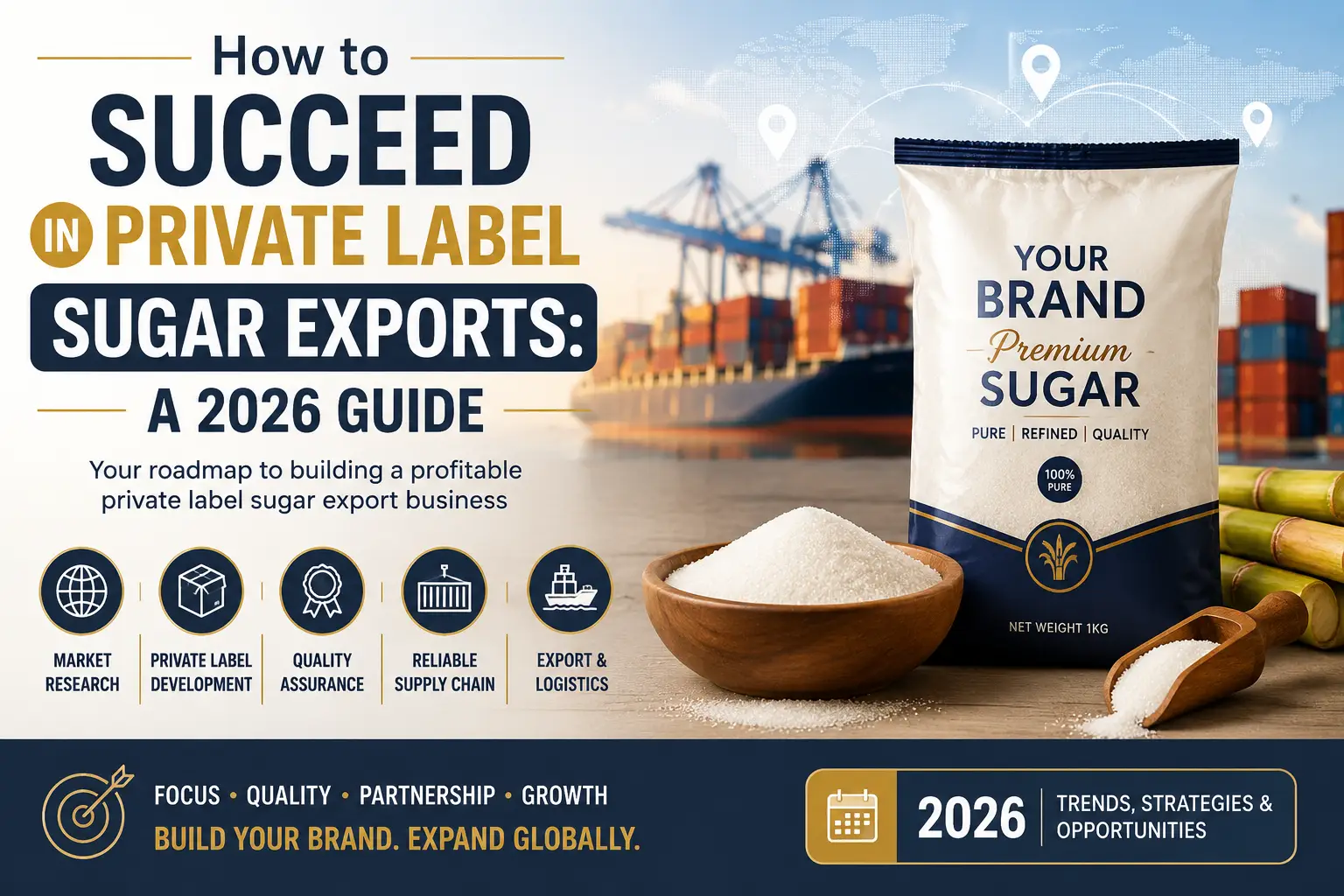
Private label sugar products are increasingly becoming a strategic choice for businesses aiming to establish their own branded sugar offerings in global markets. For companies seeking reliable partners to supply premium quality sugar with customized packaging and consistent export-grade standards, understanding the nuances of private label sugar exports is critical. This guide provides senior decision-makers with actionable insights on the benefits, market demand, supplier selection, compliance, and marketing strategies to succeed in the private label sugar business in 2026.
Introduction to Private Label Sugar Products
Private label sugar products refer to sugar that is produced and packaged by a supplier but sold under the retailer’s or buyer’s own brand name. This business model enables distributors, retailers, and food producers to differentiate their product offerings without investing in manufacturing infrastructure. In the context of the global sugar trade, private label products offer greater control over brand identity, packaging design, and product specifications, making them highly attractive for businesses targeting diverse international markets.
The private label sugar market encompasses various sugar types, including refined white sugar, ICUMSA 45, brown sugar, organic varieties, and specialty grades tailored to specific culinary or industrial needs. These products are usually packaged in consumer-friendly sizes ranging from 500 grams to 50 kilograms, with flexible packaging options to suit retail, foodservice, and industrial buyers.
For exporters, supplying private label sugar products involves not only delivering high-quality raw material but also providing end-to-end services such as custom labeling, packaging design, and ensuring compliance with food safety standards. This approach supports brand-building efforts and helps buyers meet evolving consumer preferences and regulatory requirements across different regions.
Understanding the operational and commercial aspects of private label sugar products is vital for businesses looking to enter or expand within this growing segment of the agro-export market.
Benefits of Exporting Private Label Sugar
Exporting private label sugar products offers several distinct advantages that can enhance business profitability and market presence. Firstly, private labeling allows buyers to leverage cost efficiencies by sourcing directly from exporters, often at prices lower than branded sugar products. This cost-effectiveness translates into improved profit margins or competitive pricing strategies in target markets.
Secondly, private label sugar enables businesses to build brand equity by offering unique product presentations and packaging tailored to consumer preferences. Customized packaging appeals to different demographics and retail formats, increasing shelf visibility and customer loyalty. For example, environmentally conscious markets demand sustainable packaging, which can be integrated into private label solutions.
Another benefit lies in supply chain control and flexibility. Private label agreements often come with buyer-specific quality standards and delivery schedules, allowing companies to better manage inventory and respond to market demand fluctuations. This reduces the risk of stockouts or overstocking and improves operational efficiency.
Finally, private label sugar exports open doors to diversified international markets. Businesses can tailor product specifications, certifications, and packaging to meet the regulatory and consumer trends in regions such as the Middle East, Africa, Southeast Asia, and Europe. This adaptability is a significant competitive advantage in the dynamic global sugar trade.
Understanding Global Demand and Market Trends in Sugar Exports
The global private label sugar market is projected to experience steady growth, driven by increasing consumer acceptance and retailer adoption worldwide. According to Market Research Future, the private label sugar market is expected to reach USD 25 billion by 2026, growing at a compound annual growth rate of approximately 5.3%. This growth reflects rising demand for affordable yet high-quality sugar products among health-conscious and value-driven consumers.
Retailers are increasingly expanding their private label portfolios to include organic and sustainably sourced sugar varieties, responding to growing environmental awareness. This trend favors suppliers who can provide traceability, certifications, and ethical sourcing practices as part of their private label offerings.
From a regional perspective, emerging markets in Africa, Southeast Asia, and the Middle East show robust demand for private label sugar due to expanding retail infrastructure and rising disposable incomes. Simultaneously, mature markets in Europe and North America continue to demand differentiated products with premium quality and innovative packaging.
Businesses entering the private label sugar export space must stay attuned to these market dynamics, adapting product lines and branding strategies accordingly. Leveraging market intelligence enables buyers to position their private label sugar products effectively and capture market share in competitive environments.
Choosing the Right Supplier: Why Quality and Reliability Matter
Selecting a trustworthy private label sugar exporter is a critical decision that impacts product quality, supply chain efficiency, and brand reputation. Quality assurance ensures that sugar products meet international food safety standards, have consistent purity, and comply with buyer-specific specifications such as crystal size, ICUMSA grading, and moisture content.
Reliability in supply is equally important. Exporters must demonstrate the capacity to fulfill large orders on time, maintain stable inventory levels, and provide transparent communication throughout the transaction process. Unreliable supply or quality inconsistencies can disrupt production lines, damage retailer relationships, and incur financial penalties.
Additional criteria include the supplier’s ability to offer private label services such as custom packaging, labeling, and adherence to regulatory requirements. Evaluating the supplier’s certifications, traceability systems, and experience with export logistics helps mitigate risks associated with cross-border trade.
For example, Weltweit Agri Exports LLP is recognized for its premium agricultural commodities and tailored private label sugar products, providing comprehensive support from sourcing through logistics. Partnering with an experienced supplier facilitates smoother market entry and operational scalability.
Customized Packaging Solutions for Private Label Sugar
Packaging plays a pivotal role in private label sugar exports by influencing consumer perception, product protection, and regulatory compliance. Customized packaging solutions allow businesses to differentiate their sugar products through design, material choice, and functional features.
Packaging options for private label sugar range from paper bags and polyethylene pouches to multi-layer laminates and eco-friendly biodegradable materials. These can be tailored in sizes from retail consumer packs (500 g, 1 kg, 5 kg) to bulk industrial bags (25 kg, 50 kg), depending on the target market and distribution channel.
Beyond aesthetics, packaging must ensure product integrity during transit and storage. Barrier properties against moisture and contaminants are essential to preserve sugar quality and extend shelf life. Additionally, labeling must comply with international regulations, including ingredient declarations, nutritional information, batch numbers, and country of origin.
Advanced suppliers provide end-to-end packaging customization services, from graphic design and private label printing to packaging material sourcing. This integrated approach reduces lead times and ensures packaging aligns with brand identity and export market requirements.
Complying with International Quality and Safety Standards
Compliance with international food safety and quality standards is non-negotiable for private label sugar exporters. Export-grade sugar must meet criteria set by regulatory bodies such as the Food Safety and Standards Authority of India (FSSAI), Codex Alimentarius, and importing country-specific agencies.
Key quality parameters include ICUMSA color grading (commonly 45 for premium refined sugar), moisture content limits, absence of contaminants, and microbiological safety. Certification schemes such as ISO 22000, HACCP, and Organic Certification add credibility and facilitate smoother customs clearance.
Buyers should verify that suppliers conduct regular quality testing using accredited laboratories and maintain traceability systems for batch tracking. Documentation such as Certificates of Analysis (COA), phytosanitary certificates, and export licenses must be provided to ensure compliance.
Adhering to these standards reduces the risk of shipment rejection, recalls, and reputational damage, while also meeting increasingly stringent requirements from retailers and consumers demanding transparency and safety.
Effective Logistics and Timely Delivery for Export Success
Timely and reliable logistics form the backbone of successful private label sugar export operations. Delays or disruptions in shipping can negatively affect inventory management, customer satisfaction, and contract fulfillment.
Exporters must coordinate with freight forwarders, customs brokers, and warehousing partners to optimize the supply chain. This includes selecting appropriate transportation modes (sea freight, air cargo, or multimodal solutions), managing lead times, and ensuring compliance with export-import documentation.
Packaging must be designed to withstand handling and environmental conditions during transit. Bulk shipments require palletization and secure loading to prevent damage and contamination. Clear communication with buyers on shipment status and tracking enhances transparency and trust.
Weltweit Agri Exports LLP emphasizes efficient logistics and proactive planning to meet delivery deadlines consistently, supporting buyers in maintaining uninterrupted supply chains and satisfying end customers.
Marketing and Branding Strategies for Private Label Sugar
Establishing a successful private label sugar brand involves strategic marketing that highlights product quality, origin, and unique selling points. Brands that communicate authenticity, sustainability, and premium quality resonate well with discerning consumers.
Packaging design should reflect brand values and appeal to target demographics, incorporating clear messaging on certifications, nutritional benefits, and usage occasions. Digital marketing, retail promotions, and participation in food trade shows further enhance brand visibility.
Collaborations with food manufacturers and retailers can create co-branded products or exclusive lines, expanding market reach. Additionally, emphasizing traceability and ethical sourcing in marketing materials differentiates private label sugar products in competitive markets.
Companies should continuously monitor market trends and consumer feedback to adapt branding strategies, ensuring sustained relevance and growth in the global sugar sector.
Partnering with Weltweit Agri Exports LLP for Premium Private Label Sugar
Weltweit Agri Exports LLP offers comprehensive private label sugar solutions tailored for international buyers seeking premium quality and reliable service. With extensive experience in exporting export-grade sugar products from India, the company ensures strict quality control, customized packaging, and compliance with global standards.
Weltweit’s private label sugar products are available in various grades, including ICUMSA 45, S30, M30, and L30, catering to diverse market needs. The company supports buyers in designing custom packaging aligned with brand identity, providing flexible order volumes and private labeling options.
Through efficient logistics management and transparent communication, Weltweit Agri Exports LLP ensures timely deliveries to key markets across Asia, Africa, Europe, and the Middle East. Their commitment to quality and customer satisfaction positions them as a trusted partner for businesses looking to grow their private label sugar business.
For companies aiming to start or expand their private label sugar export operations, partnering with Weltweit Agri Exports LLP offers a reliable path to market success supported by premium agricultural commodities and custom packaging solutions designed for global food ingredient supply chains.
Related Articles
- A Practical Buyer’s Guide to Corn from INDIA
- Rice Exporter in India: A Complete Guide for Global Rice Buyers
- Agri Products Exporters from India | Premium Indian Agri Commodities
- How to Identify the Best Corn Exporter in India for South Korean Buyers
- The Benefits of Sourcing Peanuts from Premium Suppliers
- Top 5 Reasons to Choose India as Your Corn Exporter for the Indonesian Market
How to Succeed in Private Label Sugar Products Export | 2026 Guide
Learn expert strategies to succeed in private label sugar exports with premium quality and reliable support from Weltweit Agri Exports LLP in 2026.