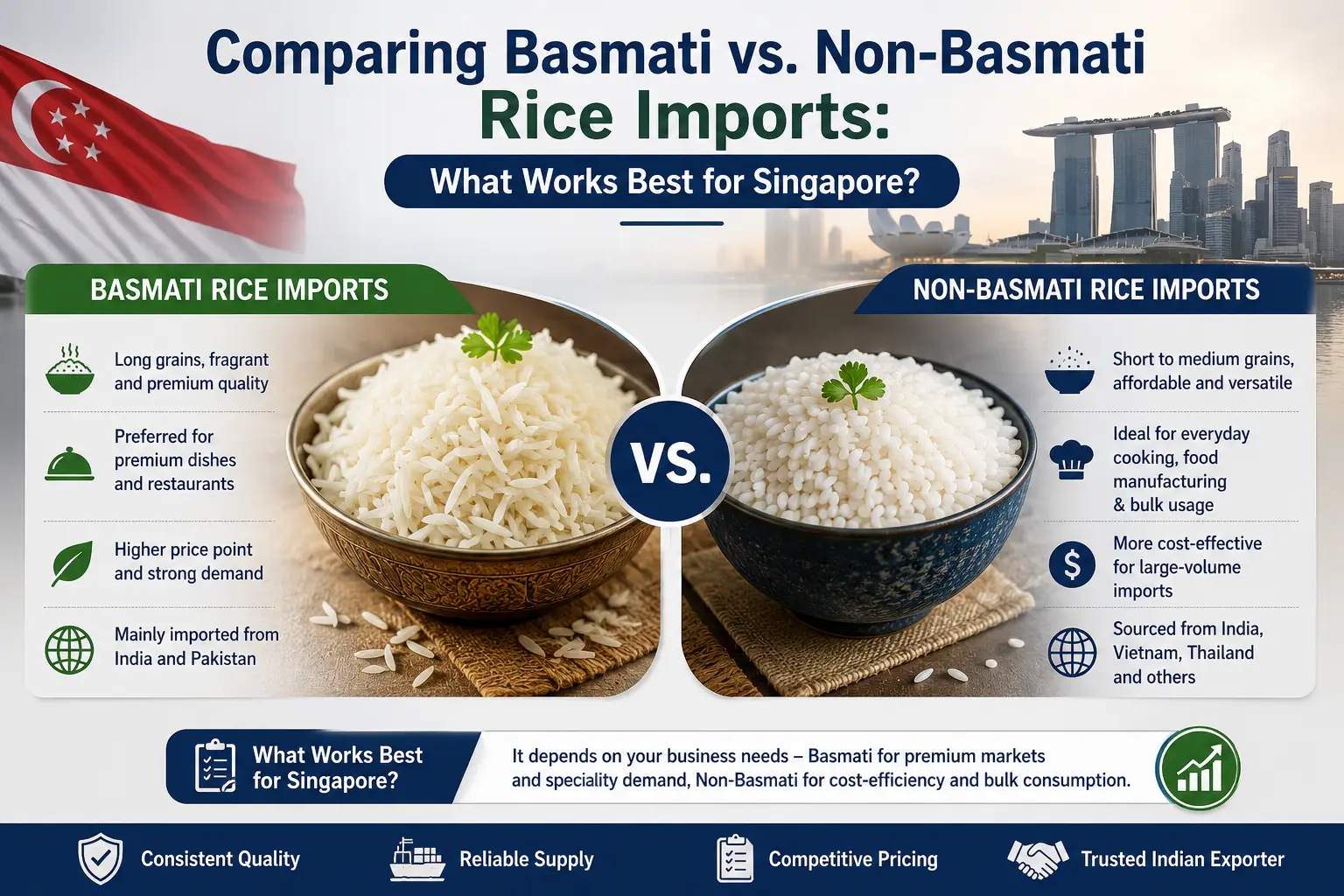
Importing rice into Singapore offers lucrative opportunities due to the city-state’s high rice consumption and reliance on imports. This guide helps importers and distributors identify the best rice varieties for Singapore’s market, emphasizing premium quality, buyer preferences, and export-ready Indian rice options to maximize profitability.
Overview of Rice Import Opportunities in Singapore
Singapore is one of the largest rice importers globally, importing over 1.4 million metric tons annually according to the Food and Agriculture Organization. With limited domestic production, the country depends heavily on imports to satisfy its diverse consumer base, from households to food service industries. Importing the right rice varieties aligned with local preferences is crucial for business success.
The country’s strategic location as a global trade hub also facilitates efficient distribution to neighboring markets. Singapore’s rice importers benefit from streamlined customs processes and a well-established supply chain infrastructure. Businesses that provide consistent quality, competitive pricing, and timely delivery gain a competitive edge in this demanding market.
Importers targeting Singapore should focus on rice varieties that meet consumer taste profiles and food industry requirements. Demand is split between premium aromatic rice such as Basmati and staple Non-Basmati varieties for daily consumption, catering to diverse culinary uses.
Moreover, Singapore’s market dynamics are influenced by its multicultural population, with varying ethnic backgrounds shaping rice consumption patterns. This diversity creates niche segments where specialized rice varieties can command premium prices, especially in gourmet retail outlets and specialty restaurants.
Understanding Singapore’s Rice Market Demand and Preferences
Singapore’s rice market is characterized by a sophisticated consumer base with diverse culinary habits influenced by Malay, Indian, Chinese, and Western cuisines. This diversity drives demand for a wide range of rice types with varying grain sizes, aroma, and cooking qualities.
Basmati rice accounts for approximately 30% of rice imports, reflecting strong demand for its long grains, fragrant aroma, and suitability for premium dishes like biryanis and pilafs. Health-conscious consumers increasingly prefer organic and premium rice, boosting demand for high-quality varieties.
Non-Basmati rice varieties, such as Sona Masoori and IR 64, remain staples for everyday consumption and institutional buyers. These varieties are favored for their texture, cooking time, and affordability, making them essential for catering services and mass consumption.
Emerging trends include the rise of ready-to-cook meal kits and convenience foods that require consistent, high-quality rice. Importers must align supply with these evolving preferences to capture growth opportunities.
Additionally, Singapore’s increasing focus on food safety and traceability means importers and exporters must provide transparent sourcing information and certifications to satisfy consumer and regulatory expectations. Organic certifications, non-GMO assurances, and fair trade labels can further enhance product appeal in premium segments.
Top Rice Varieties to Import into Singapore for Maximum Profit
Selecting the right rice varieties is crucial for maximizing profit margins. Importers should focus on a balanced portfolio including premium Basmati and versatile Non-Basmati types tailored to Singapore’s market.
Premium Basmati varieties such as 1121, Pusa, and Sugandha offer superior grain length, aroma, and cooking performance, commanding higher price points. These varieties cater to premium restaurants, ethnic food markets, and health-conscious consumers.
Non-Basmati rice varieties like Sona Masoori, Swarna, and IR 64 offer affordability and consistent quality, appealing to bulk buyers and food processors. Offering both types ensures coverage across segments from gourmet to mass consumption.
Importers can also consider niche varieties like Traditional Basmati and specialty millets to differentiate their offerings. However, understanding local demand and conducting market research remains key to avoiding inventory risks.
For example, the 1121 Basmati rice is renowned for its extra-long slender grains and unique aroma, making it highly sought after in Singapore’s premium dining establishments. On the other hand, varieties like Sona Masoori serve the bulk retail and institutional markets due to their lower cost and versatility.
Importers should also consider the cooking characteristics and shelf life of the rice types they select. Varieties with longer shelf life and resistance to pests and moisture can reduce storage losses and increase profitability.
Premium Indian Basmati Rice: Varieties and Benefits
India is the world’s largest exporter of Basmati rice, known for its exceptional quality and unique characteristics. Weltweit Agri Exports LLP specializes in premium Indian Basmati rice varieties, including 1121, 1509, Pusa, Sugandha, and Sharbati, all highly sought after in Singapore.
Basmati rice is prized for its extra-long grains, delicate aroma, and fluffy texture after cooking. These attributes make it ideal for premium culinary applications such as biryanis, pulao, and gourmet restaurant menus. Singaporean consumers associate Basmati rice with quality and authenticity.
Premium Indian Basmati rice also offers export-grade quality with strict control on purity, moisture content, and grain uniformity. This ensures compliance with Singapore Food Agency standards and buyer-specific requirements, reducing the risk of rejections and enhancing buyer confidence.
Importers benefit from customized packaging options, ranging from retail-friendly 1 kg packs to bulk 50 kg bags, with private-label opportunities to strengthen brand presence in Singapore’s competitive market.
Moreover, premium Basmati rice varieties from India are often aged for 12-24 months to enhance their aroma and cooking qualities, a factor highly valued by discerning buyers in Singapore. Weltweit Agri Exports LLP ensures such aging processes are followed to deliver superior product experience.
Technical benefits include low starch content and elongation ratios that result in fluffy, non-sticky cooked rice, enhancing consumer satisfaction and repeat purchase potential.
Non-Basmati Rice Varieties Suitable for Singapore Market
Non-Basmati rice varieties remain essential for daily consumption in Singapore due to their affordability, versatility, and quick cooking times. Popular varieties such as Sona Masoori, IR 64, Swarna, PR 11, and PR 14 are widely imported and preferred by bulk buyers, institutions, and food processors.
These varieties are well-suited for steamed rice dishes, fried rice, and other everyday culinary uses. Their consistent quality and taste appeal to consumers seeking value without compromising on texture or flavor.
Weltweit Agri Exports LLP offers export-grade Non-Basmati rice with stringent quality control and customized packaging to meet Singapore’s retail and institutional demands. Suppliers focusing on purity, grain size uniformity, and moisture content gain reliability in this competitive segment.
Offering a range of packaging sizes, including bulk and consumer packs, allows importers to serve diverse distribution channels from supermarkets to food service companies effectively.
In addition, Non-Basmati rice varieties like PR 11 and PR 14 are particularly favored by food processing industries due to their grain hardness and better yield, making them cost-effective options for large-scale manufacturers of rice-based products and ready meals.
Importers should also take into account the milling quality and broken rice percentage when sourcing Non-Basmati varieties, as these impact pricing and end-use suitability.
Packaging and Customization Options for Rice Imports
Packaging plays a critical role in rice import success in Singapore, influencing shelf appeal, preservation, and compliance with regulations. Importers should prioritize packaging solutions that maintain rice quality and meet retailer and consumer expectations.
Common packaging options include 1 kg, 5 kg, 10 kg, 25 kg, and 50 kg bags, allowing flexibility for different market segments. Retail packs are often resealable and printed with nutritional information, cooking instructions, and branding.
Customized private-label packaging is increasingly popular among Singaporean importers and distributors aiming to build brand recognition and customer loyalty. Weltweit Agri Exports LLP supports such tailored packaging solutions, ensuring compliance with local labeling requirements.
Packaging materials must also protect against moisture, pests, and contamination throughout shipping and storage. High-barrier laminates and hygienic processing standards are crucial to preserving rice freshness.
Innovative packaging features such as transparent windows, tamper-evident seals, and eco-friendly materials are gaining traction among environmentally conscious consumers and retailers in Singapore. Offering biodegradable or recyclable packaging can be a differentiator in this evolving market.
Furthermore, bulk packaging solutions with inner liners and vacuum sealing are preferred for institutional buyers to ensure prolonged shelf life and ease of handling.
Quality Control and Compliance for Rice Import into Singapore
Maintaining consistent rice quality and adhering to Singapore’s import regulations are vital for long-term business success. The Singapore Food Agency (SFA) enforces strict standards on pesticide residues, contaminants, moisture content, and labeling.
Importers must ensure rice shipments comply with these standards to avoid delays or rejections. Sourcing from reputable exporters with robust quality control protocols guarantees export-grade rice that meets international and Singaporean requirements.
Weltweit Agri Exports LLP implements comprehensive quality control measures including laboratory testing, traceability, and certification to ensure rice purity and safety. Buyers receive documentation such as phytosanitary certificates, quality analysis reports, and compliance certificates.
Working with experienced exporters simplifies regulatory compliance and supports timely customs clearance, protecting importers from costly disruptions.
Importers should also conduct periodic quality audits and inspections at origin points to verify milling and storage conditions, ensuring rice meets the agreed specifications throughout the supply chain.
Compliance with international standards such as ISO, HACCP, and GlobalGAP further strengthens the product’s marketability and acceptance among Singapore’s discerning buyers.
Logistics and Delivery: Ensuring Timely Supply to Singapore
Efficient logistics are critical to maintaining rice quality and meeting Singapore’s demand schedules. Importers should partner with exporters experienced in international shipping, customs clearance, and last-mile distribution.
Sea freight is the most common mode for rice imports, with transit times from India to Singapore averaging 7-10 days. Exporters like Weltweit Agri Exports LLP offer consolidated shipments and containerized cargo tailored to buyer volumes.
Timely delivery is essential to prevent stockouts and preserve rice freshness. Exporters must coordinate with reliable freight forwarders and local distributors to ensure seamless supply chain management.
Importers should also consider storage conditions in Singapore to prevent moisture ingress and contamination, maintaining rice quality until final sale.
Advanced tracking and shipment monitoring technologies can further enhance supply chain transparency, allowing importers to proactively manage inventory and respond to market demands swiftly.
Additionally, understanding peak demand seasons and aligning shipments accordingly can optimize inventory turnover, reducing warehousing costs and spoilage risks.
Pricing Strategies and Buyer Decision Criteria in Singapore
Successful rice importers into Singapore must understand the pricing dynamics and key buyer decision factors influencing purchase behavior. Price competitiveness remains critical, but buyers increasingly balance cost with quality, traceability, and brand reputation.
Premium rice varieties like Basmati command higher prices justified by superior aroma, grain length, and cooking characteristics, appealing to niche markets including gourmet restaurants and health-conscious consumers. Non-Basmati rice targets price-sensitive mass markets and institutional buyers such as catering companies and food manufacturers.
Buyers also evaluate supplier reliability, including consistency in product specifications, packaging accuracy, and on-time delivery. Importers offering flexible order quantities and customized packaging often gain preference.
Value-added services such as providing detailed lab test reports, organic certifications, and sustainable sourcing assurances increasingly influence buyer decisions, especially in Singapore’s quality-driven market.
Importers should conduct competitive benchmarking and market research to align pricing strategies with target customer segments, ensuring profitability without compromising market share.
Conclusion: Choosing the Right Rice Variety for Profit Optimization
Maximizing profit from rice imports into Singapore requires a strategic focus on market demand, quality, and supply chain efficiency. Premium Indian Basmati rice varieties offer higher margins driven by consumer preference for aromatic, long-grain rice, while Non-Basmati types ensure volume and affordability.
Partnering with a trusted exporter like Weltweit Agri Exports LLP ensures access to export-grade rice, flexible packaging, strict quality control, and reliable logistics tailored to Singapore’s market.
Importers who align product selection with Singapore’s diverse culinary preferences, invest in compliant packaging, and maintain rigorous quality standards will position themselves for sustained success in this competitive market.
For detailed guidance on sourcing premium Indian rice with customized packaging solutions and compliance assurance, explore Weltweit Agri Exports LLP’s offerings in Premium Indian Basmati Rice Varieties for Export and Customized Packaging Solutions for Agri Commodities.
Related Articles
- Avoid Costly Mistakes: Essential Tips for Singapore Rice Importers
- Avoid These 7 Common Mistakes When Importing Rice to Singapore
- Top 5 Rice Export Countries Supplying Singapore’s Market in 2026
- How to Succeed in Private Label Sugar Exports: A 2026 Guide
- How to Identify the Best Corn Exporter in India for South Korean Buyers
- The Benefits of Sourcing Peanuts from Premium Suppliers
Best Types of Rice to Import into Singapore for Profit
Discover the best rice varieties to import into Singapore for maximum profit, focusing on quality, demand, and premium Indian rice options.