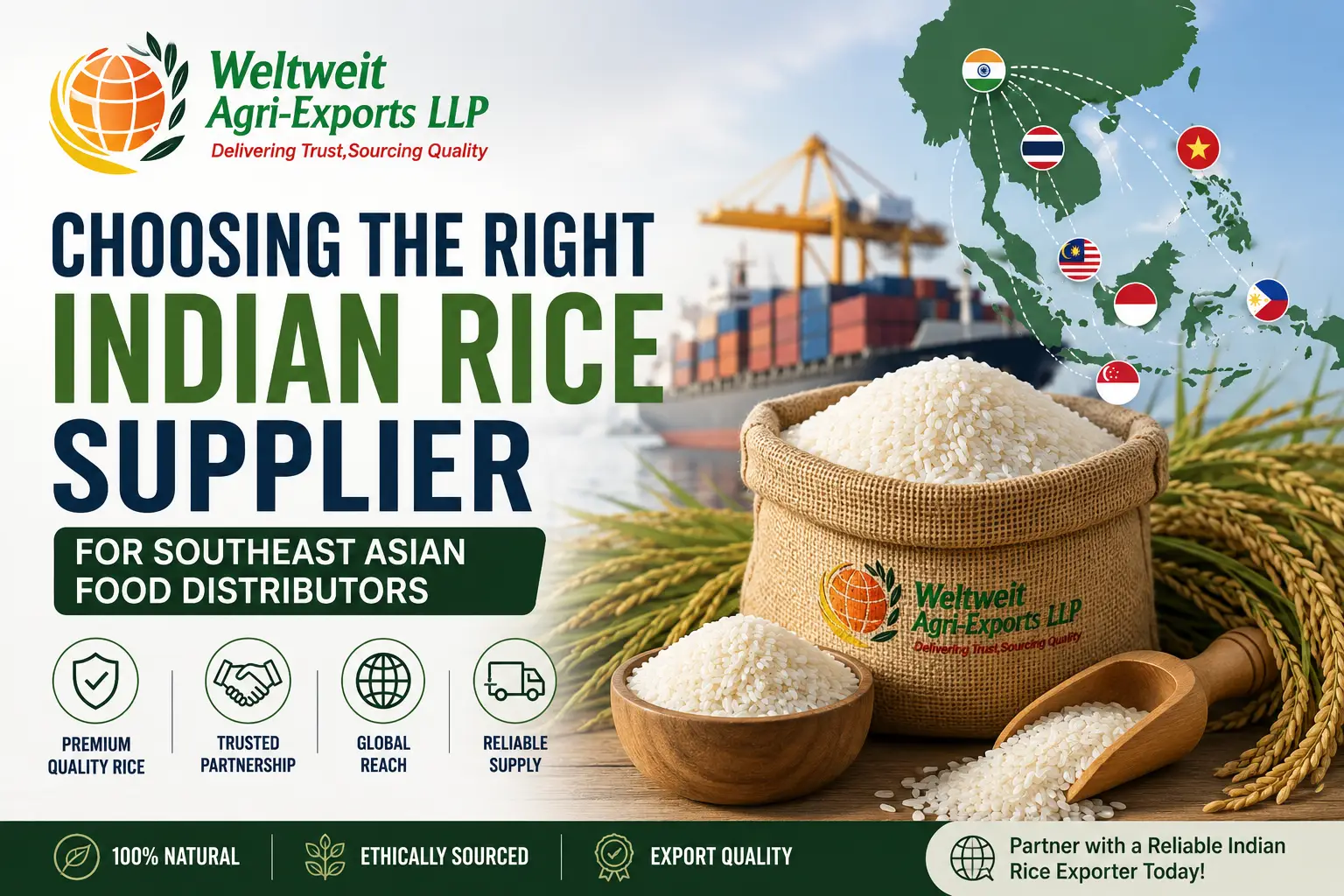
Choosing the right Indian rice supplier for Southeast Asian food distributors is not only a purchasing decision but a supply chain decision. For importers, wholesalers, supermarket suppliers, food service distributors, and processors, rice quality must align with local culinary preferences, import regulations, packaging needs, and delivery schedules. A dependable Indian rice exporter can help reduce shipment risk, maintain product consistency, and support long-term market growth.
Because Southeast Asian markets often demand precise grain appearance, cooking behavior, and documentation standards, buyers should assess suppliers beyond price alone. The best partner will combine product knowledge, export compliance, packaging flexibility, and strong logistics coordination.
1. Align Grain Specifications with Regional Culinary Standards
One of the first steps in selecting an Indian rice supplier for your distribution business is confirming that the rice matches end-market expectations. In Southeast Asia, buyers often evaluate rice based on grain length, elongation after cooking, aroma, texture, whiteness, moisture, and broken percentage.
Premium Basmati varieties such as 1121 and 1509 are widely preferred for applications where aroma, presentation, and elongation matter, including hospitality, catering, restaurants, and premium retail. These varieties are often suitable for markets such as Singapore, Malaysia, and Indonesia where consumers and food businesses value premium long-grain rice for biryani, pulao, and other rice-based dishes.
For large-volume daily consumption, institutional supply, and food processing, non-Basmati options such as IR 64, Swarna, and Sona Masoori are often more practical. These varieties can offer cost efficiency, stable cooking performance, and broad retail acceptance depending on the target segment.
Distributors should clearly define the following before confirming an order:
- Variety and origin
- Grain length and appearance
- Broken percentage
- Moisture level
- Whiteness and polishing level
- Aroma requirements
- Amylose or starch characteristics where relevant
- Intended end use such as retail, catering, or processing
A professional agri products exporter from India should be able to provide technical specifications and pre-shipment quality details so buyers can evaluate suitability before dispatch.
Why Amylose and Texture Matter
Amylose content affects how rice performs after cooking. Rice with higher amylose generally cooks drier and more separate, while lower amylose rice can cook softer. For distributors supplying multiple customer segments, this is important because the same rice may not suit all applications equally. Matching cooking behavior to market preference helps reduce complaints, product returns, and buyer dissatisfaction.
2. Check Phytosanitary Compliance and Import Documentation
Regulatory compliance is one of the most important criteria when evaluating an Indian rice supplier for Southeast Asian imports. Rice shipments must satisfy destination-country rules related to food safety, plant health, and customs documentation. Requirements can vary across markets such as Singapore, Vietnam, the Philippines, Malaysia, and Indonesia.
At a minimum, importers typically expect export documentation such as:
- Phytosanitary certificate
- Fumigation certificate
- Certificate of origin
- Packing list
- Commercial invoice
- Bill of lading
- Quality or inspection documents where required
Distributors should also verify whether the exporter conducts batch testing through accredited laboratories. This is especially important when buyers need assurance on pesticide residue limits, heavy metals, and other destination-specific compliance points. A supplier familiar with international food export procedures is better positioned to minimize customs delays and reduce the risk of rejection at port.
Moisture Control and Cargo Protection
Moisture control is critical during sea transit. Proper export-grade rice handling helps reduce the risk of mold, infestation, odor transfer, and quality deterioration. In practice, buyers should confirm:
- Moisture parameters agreed in the contract
- Container cleanliness and suitability
- Use of desiccants where needed
- Proper fumigation and sealing procedures
- Storage conditions before stuffing
These details are especially important for long-distance shipments or for buyers operating in humid climates.
3. Evaluate Private-Label Packaging and Customization
Packaging flexibility is a major advantage when selecting an Indian rice supplier for food distribution. Southeast Asian distributors often serve several channels at once, including modern retail, traditional trade, horeca, wholesale, and institutional buyers. A supplier that offers multiple packaging formats can help streamline market entry and lower local repacking costs.
Common packaging requirements may include:
- 1 kg, 5 kg, 10 kg, 25 kg, and 50 kg packs
- Retail pouches for supermarkets and convenience stores
- Bulk woven PP bags for wholesale and food service
- Private-label branding
- Custom print designs
- Buyer-specific labeling
For premium rice, packaging also plays a product protection role. Materials such as BOPP laminated bags, non-woven bags, and multi-layer pouches can help preserve aroma, reduce exposure to moisture, and improve shelf presentation.
Labeling Readiness for Local Markets
Importers should confirm whether the supplier can support destination-market labeling requirements, including multilingual packaging, nutritional declarations, batch coding, importer details, and country-of-origin information where applicable. Retail-ready packaging prepared at origin can save time and reduce post-arrival handling.
| Rice Variety | Average Grain Length | Amylose Content | Common Target Segments |
|---|---|---|---|
| 1121 Basmati Rice | 8.35 mm+ | 20% – 22% | Premium catering, restaurants, retail |
| IR 64 Non-Basmati | 6.00 mm+ | 23% – 25% | Wholesale, food processing, daily use |
| Sona Masoori | 5.20 mm+ | 18% – 20% | Household retail, diaspora markets |
4. Review Port Access and Logistics Infrastructure
Logistics efficiency directly affects landed cost, delivery reliability, and inventory planning. When choosing an Indian rice supplier for Southeast Asian markets, buyers should assess how well the exporter manages inland transport, container stuffing, customs clearance, and shipment scheduling.
Exporters with strong connectivity to major Indian ports such as Nhava Sheva (JNPT) and Mundra may offer operational advantages through better shipping access and more frequent sailings to regional destinations such as Singapore, Port Klang, Manila, Jakarta, and Ho Chi Minh City.
Buyers should ask suppliers about:
- Preferred port of loading
- Typical documentation turnaround time
- Container loading and stuffing process
- Shipping line coordination
- Ability to manage repeat shipments
- Track-and-trace communication during transit
Timely dispatch of documents such as the bill of lading, packing list, and commercial invoice is essential for smooth destination clearance. Delays in paperwork can create avoidable storage costs, demurrage, and supply disruptions.
5. Assess Pricing Transparency and Risk Management
Rice procurement is influenced by crop conditions, freight movement, currency changes, and export policy developments. This makes commercial transparency important when selecting an Indian rice supplier for long-term distribution. Importers should understand whether the price is quoted on FOB, CFR, or CIF terms and what exactly is included in the offer.
Reliable suppliers usually support buyers with:
- Clear commercial terms
- Defined product specifications
- Shipment scheduling visibility
- Consistency in documentation
- Communication on policy or market changes
India continues to play an important role in global rice trade, and industry references such as APEDA are useful for monitoring export updates and trade information. For distributors, working with a transparent supplier can make planning easier during periods of market volatility.
Long-Term Supply Relationships Matter
For recurring buyers, a long-term supply relationship can be more valuable than chasing short-term price advantages. A supplier who understands buyer specifications, packaging needs, and destination compliance requirements is often better equipped to deliver consistent performance over time.
How to Evaluate an Indian Rice Supplier Before Ordering
Before placing a commercial order, food distributors should carry out a structured supplier review. This helps reduce import risk and improves procurement accuracy.
- Request product specifications for each rice variety
- Confirm broken percentage, moisture, and packaging details
- Review available documentation and export readiness
- Ask about quality control, grading, and sorting processes
- Check private-label and custom packaging capability
- Confirm preferred port of loading and shipment coordination
- Clarify Incoterms, payment terms, and lead times
This process helps buyers compare suppliers on operational capability, not just on pricing.
How to Start Sourcing Premium Indian Rice
For distributors ready to improve sourcing efficiency, working with an experienced rice exporter can simplify procurement, documentation, packaging, and logistics. If your company imports Basmati Rice, Non-Basmati Rice, or both, supplier selection should be based on product consistency, compliance readiness, and execution strength.
To explore broader agricultural sourcing strategies, you can also read our guide on choosing a Peanut Exporter from India.
If you are looking for a reliable partner for premium Indian rice with buyer-specific packaging and dependable export support, contact Weltweit Agri Exports LLP to discuss your sourcing requirements and request a tailored quote.
Frequently Asked Questions
What should I ask an Indian rice supplier before importing?
Ask for the rice variety, grain length, broken percentage, moisture level, packaging options, private-label capability, laboratory testing details, export documentation, port of loading, and shipment lead time.
Which Indian rice varieties are commonly suitable for Southeast Asian markets?
It depends on the end use. Premium segments may prefer Basmati varieties such as 1121 and 1509, while daily consumption and processing channels may prefer options such as IR 64, Swarna, or Sona Masoori.
Why is documentation important when sourcing rice internationally?
Documentation supports customs clearance, phytosanitary compliance, origin verification, and shipment release at destination. Incomplete or delayed documents can slow down imports and increase costs.
Can an exporter provide private-label rice packaging?
Yes. Many exporters offer private-label packaging in retail and bulk formats, including 1 kg to 50 kg pack sizes. Buyers should confirm artwork support, print quality, and labeling compliance for their market.
How do distributors reduce risk when choosing an Indian rice supplier for export?
They reduce risk by verifying product specifications, checking documentation readiness, requesting quality details, confirming logistics capability, and partnering with an exporter experienced in the target market.
Related Articles
- Basmati Rice Exporter from India: How to Choose the Right Supplier for Global Rice Trade
- The Complete B2B Guide to Sourcing and Importing Indian Rice to Singapore
- The Ultimate Sourcing Guide: Partnering with an Indian Spices Exporter for Global Food Brands
- Direct Sourcing vs. Middlemen: Why Importing from an Established Indian Spices Exporter Saves Costs
- Indian Maize vs. Global Competitors: Why Partnering with a Corn Exporter in India Offers Better ROI
- Why is Indian Yellow Maize in High Demand? What Global Buyers Must Look for in a Corn Exporter in India
Indian Rice Supplier for Southeast Asian Distributors
A practical guide to evaluating quality specifications, compliance, packaging, and logistics when sourcing Indian rice for distribution in Southeast Asia.