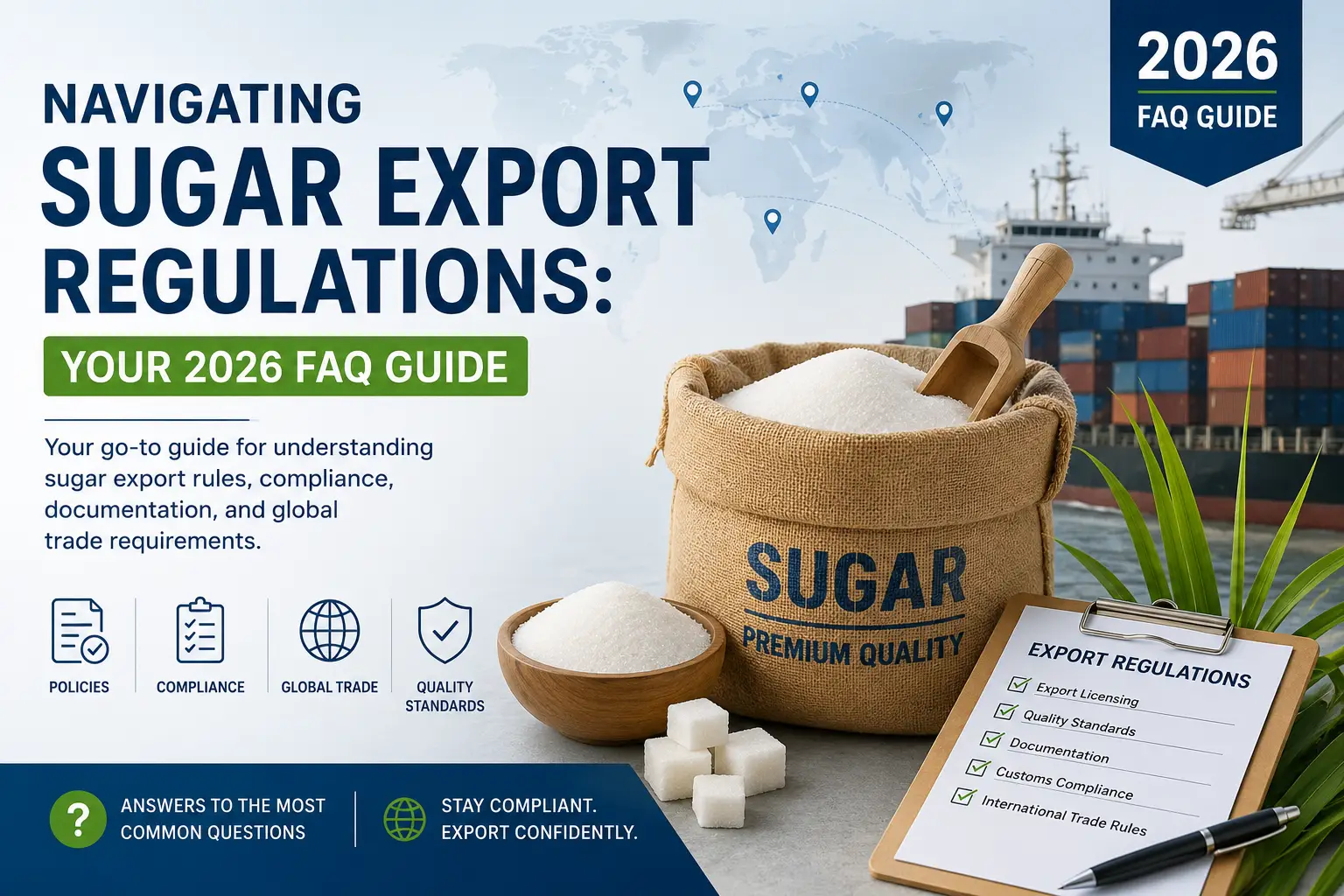
Understanding sugar export regulations in 2026 is essential for agricultural exporters aiming to operate seamlessly in international markets. These regulations govern compliance requirements, documentation, licensing, and trade protocols that vary by country and impact the efficiency and profitability of sugar exports. This guide provides a detailed overview of global sugar export rules 2026, helping exporters avoid costly delays and ensure smooth shipments.
Overview of Global Sugar Export Market Trends for 2026
The global sugar market in 2026 is shaped by evolving trade policies, sustainability concerns, and fluctuating demand across regions. According to the International Sugar Organization, the sugar industry is increasingly influenced by national regulatory frameworks that affect export flows, tariffs, and quality standards. Exporters must navigate these variables while addressing growing buyer emphasis on sustainable sourcing practices.
In 2026, demand for premium-quality sugar continues to rise in emerging and developed markets alike, driven by food processing, confectionery, and beverage sectors. This growth places pressure on exporters to maintain compliance with complex international regulations, including safety and quality certifications. Moreover, geopolitical factors and trade agreements increasingly impact tariff structures, affecting competitive positioning.
Exporters also face challenges related to the harmonization of standards, as countries enact stricter import controls to protect domestic producers or public health. These trends underscore the importance of staying current with regulatory changes and adopting agile compliance strategies to capitalize on global sugar trade opportunities.
For exporters of premium agricultural commodities like sugar, aligning with these market dynamics is critical to securing reliable buyers and expanding into new regions. Leveraging customized packaging and logistics solutions can further differentiate suppliers in the competitive global export landscape.
Key Regulatory Bodies and Their Roles in Sugar Export Compliance
Various international and national regulatory bodies govern sugar export regulations in 2026, each playing a distinct role in ensuring product safety, quality, and fair trade practices. The International Sugar Organization (ISO) coordinates global sugar market information and fosters cooperation among member countries on trade policies and standards.
On the national level, exporters must comply with agencies such as the Food and Agriculture Organization (FAO), customs authorities, and agricultural export promotion boards. These bodies enforce export licensing, phytosanitary certifications, and quality inspections. For example, India’s Directorate General of Foreign Trade (DGFT) administers export licenses and monitors compliance with export quotas and standards.
In addition to public authorities, standardization organizations like the Codex Alimentarius Commission develop international food standards that influence sugar export documentation requirements and testing protocols. Private certification bodies also provide sustainability and quality assurance certifications increasingly demanded by buyers.
Understanding the jurisdiction and specific requirements of these bodies is critical for exporters to avoid non-compliance penalties, shipment rejections, or delayed customs clearance. Proactive engagement with regulatory agencies and certification programs enhances transparency and builds buyer confidence.
Mandatory Documentation and Licensing for Sugar Exports in 2026
Successful sugar export operations hinge on meticulous adherence to documentation and licensing protocols set forth in sugar export regulations 2026. The essential documents include export licenses, phytosanitary certificates, quality inspection reports, customs declarations, and certificates of origin.
Export licenses issued by national trade authorities validate the exporter’s eligibility and compliance with quota restrictions or export bans. Phytosanitary certificates ensure the sugar shipment meets plant health standards, preventing contamination or pest transmission in importing countries.
Quality inspection reports confirm sugar purity, crystal size, and ICUMSA grading, which are critical for meeting buyer specifications and regulatory thresholds. Customs declarations must accurately reflect shipment details, including product classification and value, to calculate tariffs and taxes correctly.
Certificates of origin authenticate the geographic source of the sugar, influencing tariff eligibility under free trade agreements. Some markets may require additional documentation such as sustainability certifications or halal compliance certificates, depending on buyer and regulatory demands.
Licensing Procedures and Renewal
Exporters must apply for sugar export licenses through designated government portals, submitting requisite documentation and complying with quota allocations. Licenses typically have validity periods and must be renewed to maintain export authorization. Failure to secure or renew licenses can result in shipment detention or fines.
Country-Specific Sugar Export Regulations and Requirements
Sugar export regulations vary significantly across major global markets, necessitating a tailored approach to compliance for each target country. For instance, the European Union enforces stringent quality standards and traceability requirements under its Common Agricultural Policy, including maximum residue limits and sustainability mandates.
In the Middle East, countries such as the UAE and Qatar require detailed import permits and compliance with halal certification standards for food products, including sugar. Tariffs and non-tariff barriers also differ widely; some countries impose high import duties to protect local producers, while others benefit from preferential trade agreements that reduce or eliminate tariffs.
Asian markets like Japan and South Korea have strict food safety regulations and require documentation proving adherence to good manufacturing practices and contaminant limits. African markets may impose additional customs clearance procedures and require certifications related to packaging and labeling.
Understanding these nuances enables exporters to customize their documentation, packaging, and quality assurance processes to meet diverse regulatory expectations and facilitate faster market entry.
Common Challenges and Pitfalls in Navigating Sugar Export Rules
Exporters frequently encounter challenges such as regulatory complexity, inconsistent enforcement, and changing compliance requirements. These issues can result in shipment delays, increased costs, or rejection by import authorities. A common pitfall is underestimating the scope of documentation required, leading to incomplete export declarations or missing certificates.
Another frequent issue involves misclassification of sugar grades or non-compliance with packaging standards, which can trigger quality disputes or customs penalties. Exporters also face difficulties staying abreast of frequent regulatory updates, especially in markets with evolving trade policies or political instability.
Tariff fluctuations and trade disputes may abruptly alter the cost structure of sugar exports, impacting contract profitability. Additionally, exporters sometimes overlook sustainability and ethical sourcing criteria now demanded by many buyers, risking reputational damage or lost business opportunities.
Mitigating these risks requires robust compliance management systems, regular regulatory monitoring, and close collaboration with logistics and customs partners to ensure accurate and timely document submission.
Best Practices to Ensure Compliance and Avoid Shipment Delays
Adopting a proactive compliance strategy is essential for exporters to navigate sugar export regulations 2026 successfully. Key best practices include maintaining updated knowledge of regulatory changes through official government portals and trade associations.
Implementing comprehensive documentation checklists and audit trails helps ensure all required licenses, certificates, and declarations are in place before shipment. Partnering with experienced customs brokers and freight forwarders enhances clearance efficiency by anticipating and resolving potential compliance issues.
Investing in quality control measures and product testing aligned with international standards reduces the risk of shipment rejection due to quality disputes. Additionally, engaging in sustainability certification programs can open doors to premium markets and buyer segments prioritizing responsible sourcing.
Communicating transparently with buyers about regulatory requirements and potential delays fosters trust and helps coordinate logistics plans that accommodate compliance timelines.
Future Outlook: Regulatory Changes to Watch Beyond 2026
Looking beyond 2026, sugar export regulations are expected to evolve in response to global sustainability agendas, technological advancements, and shifting trade geopolitics. Governments are likely to tighten environmental and social compliance standards, integrating carbon footprint reporting and labor rights verification into export requirements.
Digitalization of export documentation through blockchain and electronic certificates will gain wider adoption, improving traceability and reducing fraud. Trade agreements may reshape tariff landscapes, with emerging economies negotiating new bilateral and multilateral deals affecting sugar export duties and quotas.
Buyers will increasingly demand transparency across supply chains, prompting exporters to adopt comprehensive traceability systems and certifications that verify origin, quality, and sustainability credentials. These trends underscore the need for exporters to invest in compliance infrastructure and remain agile to regulatory shifts.
Staying informed through industry organizations and government advisories will be crucial to anticipate changes and maintain competitive advantage in global sugar trade.
Conclusion: Staying Prepared for Successful Sugar Export Operations
Mastering sugar export regulations in 2026 is a critical factor for agricultural exporters seeking to optimize international trade performance. Understanding the global regulatory landscape, complying with mandatory documentation and licensing, and adapting to country-specific requirements enable smooth shipments and mitigate risks of delays or penalties.
By addressing common compliance challenges proactively and adopting best practices, exporters can enhance operational efficiency, build buyer trust, and capitalize on growing demand for premium-quality sugar. Anticipating future regulatory trends and investing in sustainable sourcing and digital compliance tools will position exporters for long-term success in the dynamic global sugar market.
For exporters looking to partner with a reliable food supply partner offering export-grade Indian sugar with customized packaging and stringent quality control, Weltweit Agri Exports LLP provides comprehensive solutions tailored for global markets. Learn more about navigating export quality agricultural products and explore opportunities in global agri trade with a trusted exporter committed to compliance and customer satisfaction.
Related Articles
- How to Succeed in Private Label Sugar Exports: A 2026 Guide
- Rice Exporter in India: A Complete Guide for Global Rice Buyers
- How to Identify the Best Corn Exporter in India for South Korean Buyers
- Top 5 Reasons to Choose India as Your Corn Exporter for the Indonesian Market
- Agri Products Exporters from India | Premium Indian Agri Commodities
- Basmati Rice Exporter from India: How to Choose the Right Supplier for Global Rice Trade
Sugar Export Regulations 2026: Your Global FAQ Guide
Explore the 2026 sugar export regulations FAQ to ensure compliance and seamless global trade for exporters worldwide.